What Is Multicast Listener Discovery (MLD)? Complete Guide To MLD In IPv6 Networks
Category: NETWORKING | 29th August 2026, Saturday
Introduction To Multicast Listener Discovery (MLD)
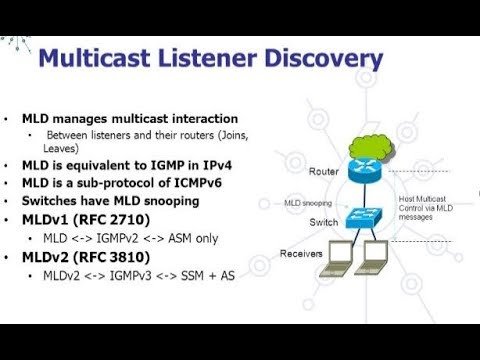
Multicast Listener Discovery (MLD) Is An Important Protocol Used In IPv6 Networks To Manage Multicast Group Membership. It Allows IPv6 Hosts And Routers To Communicate About Which Multicast Groups Are Being Listened To By Devices On A Network. MLD Performs A Role In IPv6 Networks That Is Broadly Comparable To The Internet Group Management Protocol (IGMP) In IPv4 Networks.
Multicast Communication Enables One Sender To Transmit Data Efficiently To Multiple Interested Receivers Without Creating Separate Unicast Connections For Every Device. MLD Is Therefore An Essential Component Of IPv6 Multicast Communication And Is Used In Applications Such As Multimedia Streaming, IPTV, Conferencing, Network Discovery, And Other One-to-many Communication Services.
Understanding IPv6 Multicast
To Understand MLD, It Is First Necessary To Understand IPv6 Multicast. Multicast Is A Communication Method In Which A Packet Is Delivered To A Specific Group Of Receivers That Have Expressed Interest In Receiving It. Unlike Unicast, Where One Sender Communicates With One Receiver, Multicast Supports One-to-many Communication.
IPv6 Has Extensive Built-in Multicast Support And Does Not Use Broadcast In The Same Way IPv4 Networks Do. Instead, IPv6 Uses Multicast For Many Network Functions. Multicast Addresses In IPv6 Begin With The Prefix FF00::/8. Devices Can Join Multicast Groups By Becoming Multicast Listeners, And MLD Helps Routers Determine Which Multicast Groups Have Active Listeners On A Network Segment.
Why MLD Is Required In IPv6 Networks
IPv6 Multicast Routers Need To Know Whether Devices On A Local Network Are Interested In Receiving Particular Multicast Traffic. Sending Every Multicast Packet To Every Device Would Waste Network Bandwidth And Increase Processing Requirements.
MLD Solves This Problem By Allowing Hosts To Report Their Multicast Group Memberships To Local Multicast Routers. Routers Can Then Determine Which Multicast Traffic Needs To Be Forwarded Onto A Particular Network Segment. This Makes Multicast Communication More Efficient. MLD Is Especially Important In Networks Where Large Amounts Of Multimedia Or Real-time Data Are Distributed To Many Receivers Simultaneously.
MLD And The IPv6 Protocol Suite
MLD Operates As Part Of The IPv6 Protocol Suite And Is Closely Associated With The IPv6 Neighbor Discovery Architecture. MLD Messages Are Carried In IPv6 Packets Using ICMPv6. This Is An Important Distinction Because MLD Does Not Operate Through TCP Or UDP Ports. Instead, MLD Uses ICMPv6 Message Types Specifically Defined For Multicast Listener Management.
Because MLD Relies On ICMPv6, Network Security Policies Must Be Designed Carefully So That Necessary ICMPv6 And MLD Traffic Is Not Accidentally Blocked. Excessively Restrictive IPv6 Firewall Rules Can Interfere With Essential Network Functionality.
How MLD Works?
The Basic Operation Of MLD Involves Three Primary Activities: Querying, Reporting, And Leaving Multicast Groups. A Multicast Router Periodically Sends An MLD Query To Determine Which Multicast Groups Have Active Listeners. IPv6 Hosts That Are Interested In Receiving Multicast Traffic Respond With Appropriate MLD Reports.
When A Host Is No Longer Interested In A Multicast Group, It Can Indicate That It Has Stopped Listening. The Router Uses This Information To Determine Whether Multicast Traffic Should Continue To Be Forwarded To The Corresponding Network Segment. This Dynamic Process Allows Multicast Forwarding To Adapt As Devices Join And Leave Groups.
MLD Listener Concept
The Term "listener" In MLD Refers To An IPv6 Host That Is Interested In Receiving Multicast Traffic Associated With A Particular Multicast Address. A Listener May Be A Computer, Server, Smartphone, Network Appliance, Television, Camera, Or Another IPv6-enabled Device.
When An Application Requires Multicast Traffic, The Operating System Can Subscribe To A Multicast Group. MLD Provides The Network-level Mechanism Through Which The Host Communicates That Interest To Multicast Routers. Therefore, The Listener Is Not Necessarily A Human User; It Is Generally A Network Device Or Application That Has Joined An IPv6 Multicast Group.
MLD Query Messages
MLD Query Messages Are Generated By Multicast Routers To Discover Multicast Listeners. A Query Can Ask Hosts Whether They Are Listening To Multicast Groups Generally Or Can Be Associated With A Particular Multicast Group. Hosts Use These Queries To Indicate Their Continued Interest In Multicast Communication.
Query Mechanisms Help Routers Maintain An Accurate Understanding Of Multicast Membership. Without Such Information, A Router Might Either Forward Multicast Traffic Unnecessarily Or Stop Forwarding Traffic Required By Legitimate Receivers. MLD Therefore Provides A Dynamic Method For Maintaining Multicast Membership Information.
MLD Report Messages
An MLD Listener Sends A Multicast Listener Report To Indicate That It Wants To Receive Traffic For A Multicast Group. Reports Allow Multicast Routers To Learn Which Groups Have Active Listeners On A Particular Interface.
Multiple Hosts May Belong To The Same Multicast Group, But The Router Generally Needs To Know Whether At Least One Listener Exists On A Particular Network Segment. This Information Is Then Used When Making Multicast Forwarding Decisions. MLD Reports Are Therefore Fundamental To The Operation Of IPv6 Multicast Networks.
MLD Listener Done And Group Departure
When A Host No Longer Wants To Receive Multicast Traffic, It Can Communicate That It Has Stopped Listening. In Earlier Versions Of MLD, This Functionality Was Associated With A Multicast Listener Done Message. Modern MLD Behavior Has Evolved With MLDv2, Where The Protocol Uses More Sophisticated Listener Reports And Source-filtering Mechanisms.
The Purpose Remains Similar: Help Multicast Routers Determine Whether A Multicast Group Still Has Active Listeners. If No Listeners Remain On An Interface, The Router Can Stop Forwarding The Associated Multicast Traffic Onto That Segment.
MLD Versions
MLD Has Evolved Through Different Versions. MLDv1 Provides Basic Multicast Listener Management, While MLDv2 Introduces More Advanced Source-filtering Capabilities. MLDv2 Is Broadly Associated With The IPv6 Equivalent Of The Source-specific Multicast Capabilities Provided By IGMPv3 In IPv4.
Source Filtering Allows Hosts To Specify Which Multicast Sources They Want To Receive Traffic From Or Which Sources They Want To Exclude. This Provides More Precise Multicast Management And Can Improve The Efficiency And Control Of Multicast Communication In Complex IPv6 Networks.
MLDv1
MLDv1 Is The Original Version Of Multicast Listener Discovery. It Provides The Basic Mechanisms Required For IPv6 Hosts To Communicate Multicast Membership Information To Routers. MLDv1 Supports General Queries, Group-specific Queries, Listener Reports, And Listener-done Functionality.
It Was Designed To Provide Efficient Multicast Membership Management In IPv6 Networks. Although MLDv1 Remains Important For Understanding The History And Fundamentals Of IPv6 Multicast, Modern Networks May Use MLDv2 When Applications Require Source-specific Multicast Capabilities.
MLDv2 And Source Filtering
MLDv2 Significantly Extends The Functionality Of MLD By Allowing Hosts To Specify Multicast Sources. A Listener Can Request Multicast Traffic From Selected Sources Or Indicate Sources From Which It Does Not Want Traffic. This Is Particularly Useful When Multiple Systems Transmit Multicast Streams To The Same Multicast Group.
Source Filtering Can Improve Traffic Control And Multicast Efficiency. It Also Provides Administrators With Greater Visibility Into The Relationship Between Multicast Receivers And Multicast Sources. MLDv2 Is Therefore Particularly Relevant In Advanced IPv6 Multicast Deployments.
MLD And Multicast Routers
Multicast Routers Play A Central Role In MLD. A Router Connected To An IPv6 Network Segment Listens For MLD Reports And Sends Queries To Discover Multicast Membership. It Can Then Use The Membership Information As Part Of Its Multicast Forwarding Decisions.
If A Network Contains Multiple Routers, Multicast Routing Protocols May Be Required To Determine How Multicast Packets Travel Between Different Network Segments. MLD Itself Primarily Handles The Relationship Between Local Hosts And Multicast Routers Rather Than Determining The Complete Path Through A Large Routed Network.
MLD And ICMPv6
MLD Is Implemented Through ICMPv6, Making ICMPv6 An Important Component Of IPv6 Multicast Management. This Means That Administrators Need To Consider MLD When Configuring IPv6 Firewalls And Intrusion-prevention Systems. Blocking ICMPv6 Indiscriminately Can Cause Problems Because IPv6 Depends On
ICMPv6 For Several Essential Networking Functions, Including Neighbor Discovery And Path MTU Discovery. Security Policies Should Therefore Distinguish Between Required ICMPv6 Messages And Traffic That Should Be Restricted. MLD Messages Should Be Permitted Where Multicast Functionality Is Intentionally Deployed.
MLD Snooping
Similar To IGMP Snooping In IPv4 Networks, MLD Snooping Allows Ethernet Switches To Examine MLD Messages And Determine Which Switch Ports Contain IPv6 Multicast Listeners. Without Snooping, A Switch May Treat Multicast Traffic Similarly To Broadcast Traffic And Forward It To Many Ports.
MLD Snooping Allows The Switch To Forward Multicast Traffic Only Toward Ports That Have Interested Receivers. This Improves Bandwidth Efficiency And Can Reduce Unnecessary Multicast Exposure. Managed Switches Commonly Provide MLD Snooping As Part Of Their IPv6 Multicast-management Features.
How MLD Snooping Improves Network Performance?
MLD Snooping Can Significantly Improve Network Performance In Environments With Many Devices. Imagine A Network Distributing A High-definition IPv6 Multicast Video Stream. If The Switch Sends That Stream To Every Connected Port, Devices That Do Not Need The Video Still Receive And Process The Traffic.
MLD Snooping Allows The Switch To Identify The Ports With Active Listeners And Forward The Multicast Stream Selectively. This Reduces Unnecessary Bandwidth Consumption And Endpoint Processing. It Is Particularly Useful For IPTV, Digital Signage, Live Streaming, And Other High-bandwidth Multicast Applications.
MLD Security Considerations
MLD Is A Legitimate IPv6 Protocol, But Its Use Can Introduce Security Considerations If Multicast Traffic Is Not Properly Controlled. Unauthorized Devices May Attempt To Join Multicast Groups Or Send Forged MLD Messages. Depending On Network Configuration, Malicious Or Malformed Traffic Could Potentially Cause Unwanted Multicast Forwarding Or Consume Network Resources.
MLD Itself Does Not Provide Comprehensive Authentication Or Encryption For Multicast Application Data. Therefore, Organizations Should Combine MLD Controls With VLAN Segmentation, Switch Security, IPv6 Access-control Policies, Monitoring, And Application-level Security.
MLD Spoofing Risks
One Possible Security Concern Is MLD Spoofing, In Which An Attacker Generates Forged MLD Messages. For Example, An Attacker May Attempt To Make A Device Appear To Be Interested In A Multicast Group When It Should Not Receive The Associated Traffic. Alternatively, Malicious Traffic Could Attempt To Manipulate Multicast Membership Information.
The Practical Impact Depends On The Capabilities Of The Network Devices And The Attacker's Position Within The Network. Network Administrators Should Use Switch-level Protections And Appropriate Access Controls To Prevent Untrusted Devices From Manipulating Multicast Behavior.
Multicast Flooding And Denial-of-Service
Uncontrolled Multicast Traffic Can Contribute To Network Congestion And Potentially Support Denial-of-service Conditions. An Attacker Or Compromised Device Could Generate Excessive Multicast-related Traffic Or Attempt To Join Numerous Multicast Groups.
If Switches And Routers Are Not Configured Correctly, The Resulting Traffic May Consume Significant Bandwidth And Processing Resources. Rate Limiting, MLD Snooping, VLAN Segmentation, And Multicast Access Policies Can Reduce These Risks. Network Monitoring Should Also Identify Unusual Multicast Traffic Patterns So That Administrators Can Investigate Potential Attacks Or Configuration Errors.
MLD And Data Confidentiality
MLD Manages Multicast Membership; It Does Not Automatically Encrypt Multicast Application Data. This Means That Joining A Multicast Group Does Not Guarantee Confidentiality. If An Organization Distributes Sensitive Information Using IPv6 Multicast, Additional Security Mechanisms May Be Required.
Encryption, Application Authentication, Access Control, And Secure Key Management May Be Necessary Depending On The Sensitivity Of The Information. This Distinction Is Important: MLD Controls Who Is Recognized As A Multicast Listener, While Encryption Protects The Content Being Transmitted.
MLD In IPTV And Video Streaming
One Of The Important Applications Of IPv6 Multicast And MLD Is IPTV And Video Streaming. A Provider Can Transmit A Single Multicast Stream That Can Be Received By Many Subscribers. When A Subscriber Selects A Channel, The Receiving Device Can Join The Corresponding IPv6 Multicast Group.
MLD Allows The Network To Learn That The Device Wants The Stream. When The Subscriber Changes Channels Or Stops Watching, Multicast Membership Can Change Accordingly. This Approach Can Significantly Reduce The Bandwidth Requirements Compared With Establishing Separate Unicast Streams For Every Receiver.
MLD In Enterprise Networks
Enterprise Networks May Use IPv6 Multicast For Collaboration Systems, Live Presentations, Digital Signage, Specialized Monitoring, Software Distribution, And Other Applications. MLD Allows Network Infrastructure To Determine Where Multicast Receivers Are Located.
However, Organizations Should Not Enable Unrestricted Multicast Forwarding Across The Entire Corporate Network. Multicast Should Be Limited To The VLANs And Network Segments That Actually Require It. Proper Segmentation Reduces Unnecessary Traffic And Helps Prevent Unauthorized Devices From Gaining Access To Multicast Streams.
MLD In IoT And Industrial Networks
IPv6 Is Increasingly Relevant To Internet Of Things And Industrial Environments, Where Multicast Can Support Communication With Groups Of Devices. MLD Can Help Manage Group Membership When Many IPv6-enabled Devices Need The Same Information.
Examples May Include Configuration Distribution, Device Discovery, Telemetry, And Coordinated Operations. However, IoT Environments Often Contain Large Numbers Of Resource-constrained Devices, Making Network Security Particularly Important. Administrators Should Carefully Control Multicast Group Membership And Monitor Unusual Multicast Activity.
Difference Between MLD And IGMP
The Most Important Difference Between MLD And IGMP Is The IP Version With Which They Are Associated. IGMP Is Used With IPv4 Multicast, While MLD Is Used With IPv6 Multicast. MLD Is Implemented Using ICMPv6, Whereas IGMP Is Carried Directly In IPv4 Packets.
MLDv2 Provides Source-filtering Functionality Comparable In Concept To IGMPv3. Although Both Protocols Perform Similar Multicast Listener-management Functions, They Belong To Different Protocol Architectures. Network Engineers Working With Dual-stack Environments Should Understand Both Protocols.
Difference Between MLD And Multicast Routing
MLD Should Not Be Confused With Multicast Routing Protocols. MLD Determines Which Local IPv6 Hosts Are Interested In Multicast Groups. Multicast Routing Protocols, On The Other Hand, Determine How Multicast Traffic Should Be Distributed Across Routed Networks.
In A Large Network, MLD May Operate Between Hosts And Local Routers While A Multicast Routing Protocol Handles Communication Between Routers. These Technologies Work Together But Solve Different Problems. Understanding This Distinction Is Important When Designing And Troubleshooting IPv6 Multicast Networks.
Benefits Of MLD
MLD Provides Several Important Benefits To IPv6 Networks. It Enables Efficient Multicast Group Management, Reduces Unnecessary Traffic, Supports Scalable One-to-many Communication, And Allows Routers To Dynamically Identify Multicast Listeners. MLDv2 Provides Additional Source-filtering Functionality For Advanced Applications.
When Combined With MLD Snooping, Switches Can Further Reduce Unnecessary Multicast Forwarding. These Capabilities Make MLD Useful For Multimedia Streaming, IPTV, Conferencing, Industrial Systems, IoT Deployments, And Other Applications Where The Same Information Must Reach Multiple Receivers Efficiently.
Best Practices For MLD Security
Organizations Should Follow Several Best Practices When Deploying MLD. First, Enable MLD Snooping On Managed Switches Where Multicast Is Required. Second, Use VLANs And Network Segmentation To Restrict Multicast Traffic To Appropriate Users And Devices.
Third, Establish Multicast Routing Boundaries And Access-control Policies. Fourth, Monitor MLD Messages And Multicast Traffic For Unusual Activity. Fifth, Keep Network-device Firmware Updated And Disable Unnecessary Multicast Functionality. Finally, Protect Sensitive Multicast Application Data With Appropriate Authentication And Encryption. A Layered Security Approach Is Much More Effective Than Relying On MLD Alone.
Troubleshooting MLD Problems
MLD-related Problems Can Result From Incorrect Router Configuration, Disabled MLD Snooping, Incompatible Protocol Versions, Firewall Rules, VLAN Problems, Or Blocked ICMPv6 Traffic. Network Administrators Can Troubleshoot MLD By Examining IPv6 Multicast Addresses, Checking MLD Membership Reports, Verifying Router Queries, Inspecting Switch MLD-snooping Tables, And Analyzing Packet Captures.
It Is Also Important To Confirm That IPv6 Multicast Traffic Is Permitted By Security Devices. Because MLD Uses ICMPv6, Administrators Should Carefully Inspect IPv6 Firewall Policies When Multicast Applications Fail Unexpectedly.
Future Importance Of MLD
As IPv6 Adoption Continues To Expand, Understanding MLD Is Increasingly Important For Network Administrators, Cybersecurity Professionals, Cloud Engineers, And Networking Students. Modern Networks Contain Large Numbers Of Connected Devices And Increasingly Depend On Efficient One-to-many Communication.
Applications Involving Streaming, IoT, Industrial Automation, Real-time Monitoring, And Distributed Services Can Benefit From Multicast. MLD Provides The Membership-management Foundation Needed For IPv6 Multicast. Its Importance Will Therefore Remain Closely Connected To The Growth Of IPv6-based Networking And Multicast-enabled Applications.
Conclusion
Multicast Listener Discovery (MLD) Is A Fundamental Protocol For managing Multicast Group Membership In IPv6 Networks. It Allows IPv6 Hosts To Inform Multicast Routers About The Groups They Are Interested In And Enables Routers To Determine Where Multicast Traffic Should Be Delivered. MLDv1 Provides Basic Membership Management, While MLDv2 Adds Advanced Source-filtering Capabilities.
MLD Works Through ICMPv6 And Can Be Complemented By MLD Snooping On Ethernet Switches To Improve Multicast Efficiency. Although MLD Is Not Inherently A Security Threat, Improperly Controlled Multicast Environments Can Create Risks Such As Unauthorized Group Membership, Spoofing, Traffic Flooding, And Exposure Of Multicast Data.
Organizations Can Mitigate These Concerns Through Segmentation, Access Controls, MLD Snooping, Monitoring, Secure Multicast Routing, And Encryption For Sensitive Information. Understanding MLD Is Therefore Essential For Anyone Studying Or Managing Modern IPv6 Networks.
Tags:
Multicast Listener Discovery (MLD), What Is MLD, IPv6 Multicast