 Networking
Computer Networking, Network Fundamentals, Networking Basics, Network Protocols, Network Security, Network Administration, Networking Tutorials, Networking Tips
Computer Networking, Network Fundamentals, Networking Basics, Network Protocols, Network Security, Network Administration, Networking Tutorials, Networking Tips
Date: 9th October 2026, Friday | Editor: Techk's Team
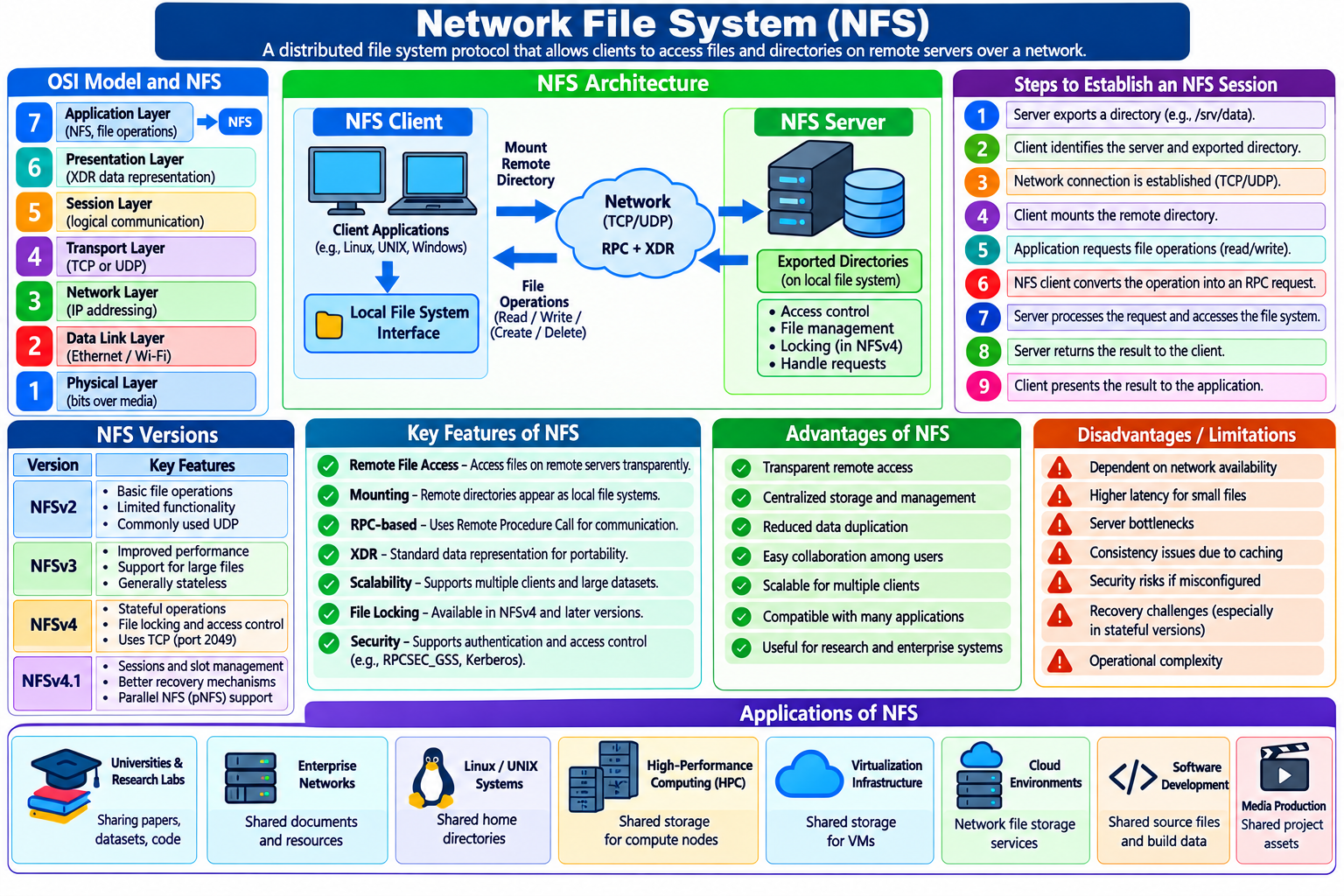
Introduction to NFS The Network File System (NFS) is a distributed file system protocol that allows users and applications to access files and directories stored on remote computers over a network. It enables a remote directory to appear as part of a local file system, allowing users to read,....
Read MoreDate: 9th October 2026, Friday | Editor: Techk's Team
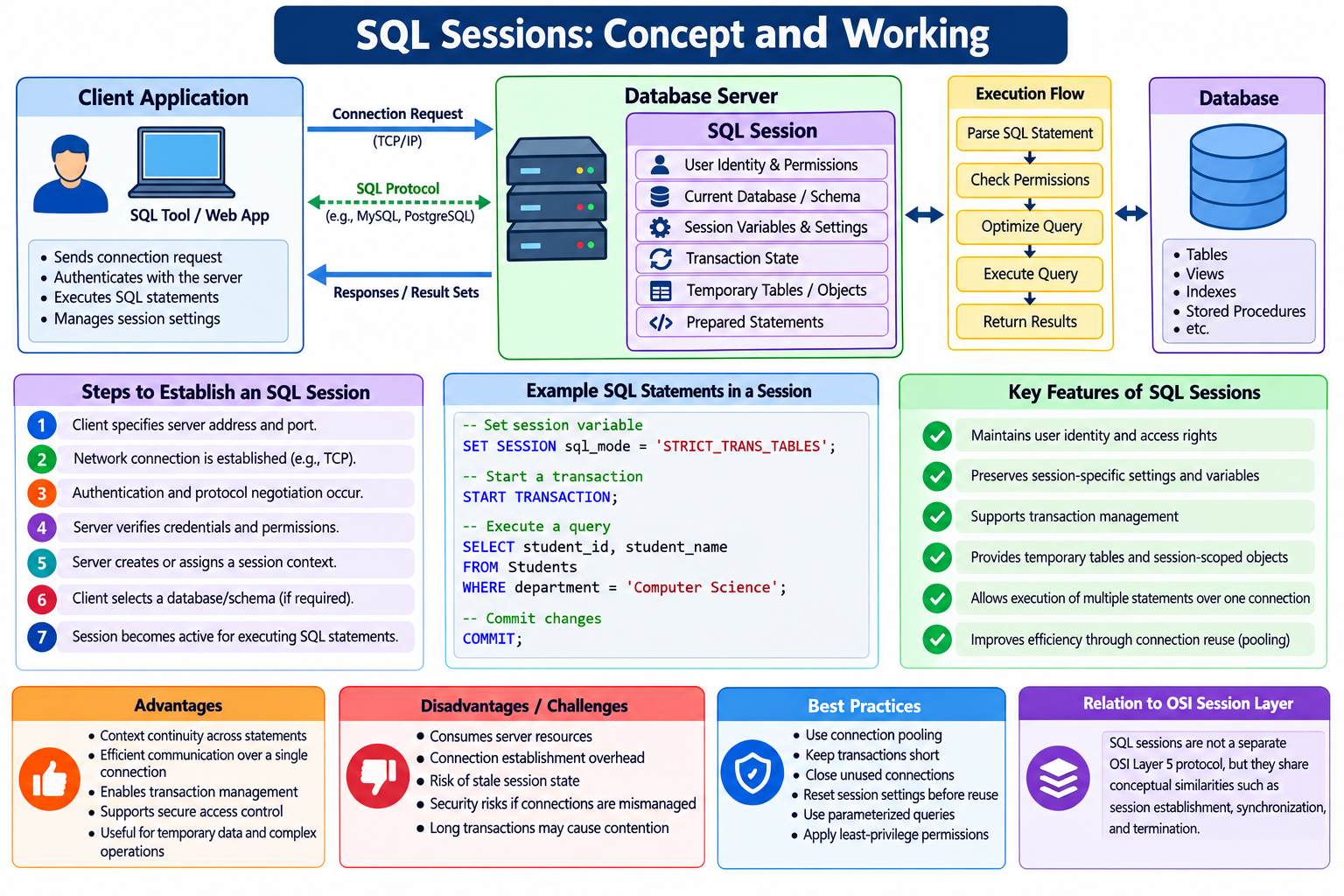
Introduction to SQL Sessions SQL sessions are an important concept in database management systems because they provide a logical environment in which a client application communicates with a database server, executes SQL statements, manages transactions, and maintains connection-specific....
Read MoreDate: 25th September 2026, Friday | Editor: Techk's Team
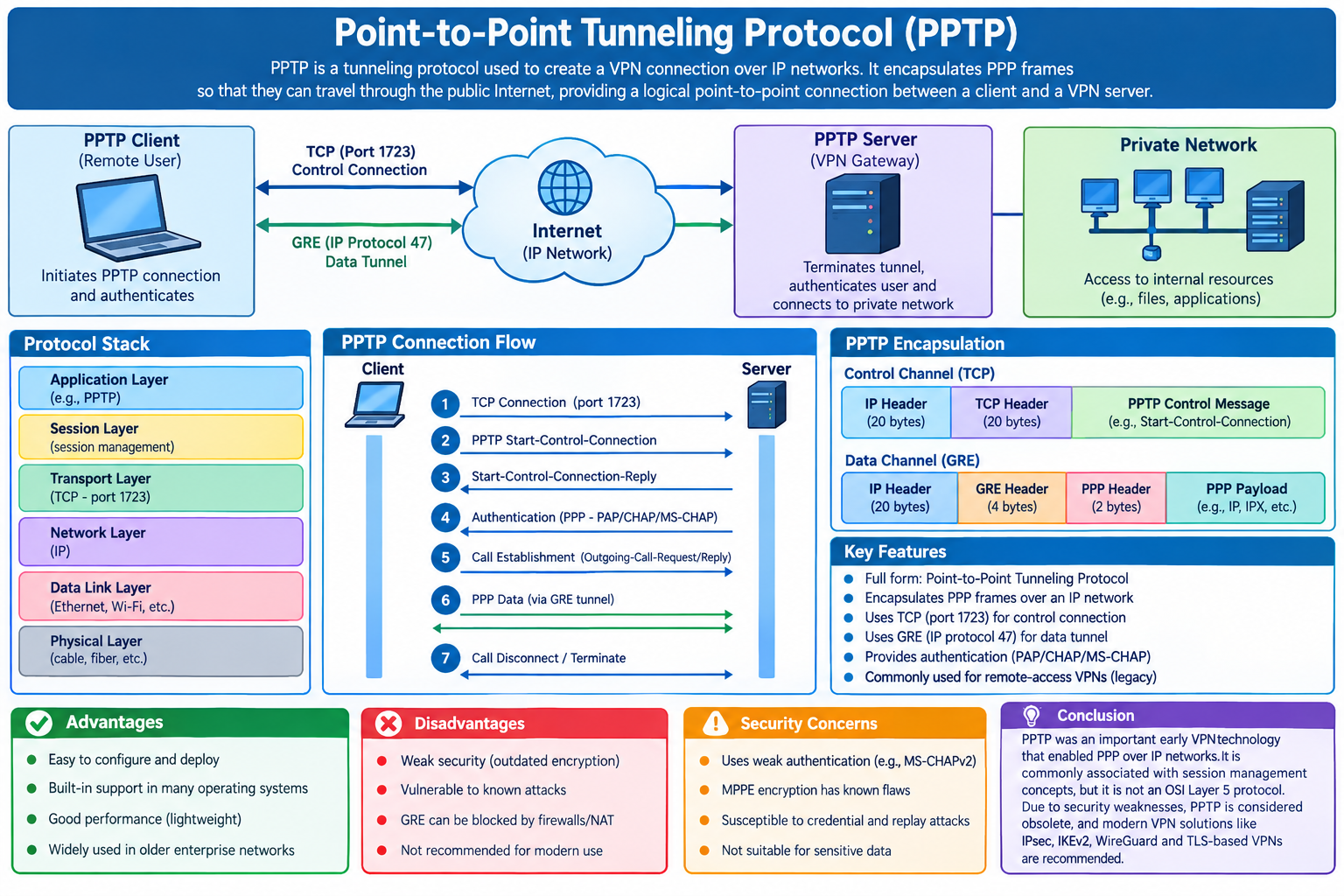
Introduction PPTP, or Point-to-Point Tunneling Protocol, is a network protocol historically used to create virtual private network (VPN) connections over IP networks. It was designed to encapsulate Point-to-Point Protocol (PPP) packets so that they could travel through an IP-based network such as....
Read MoreDate: 25th September 2026, Friday | Editor: Techk's Team
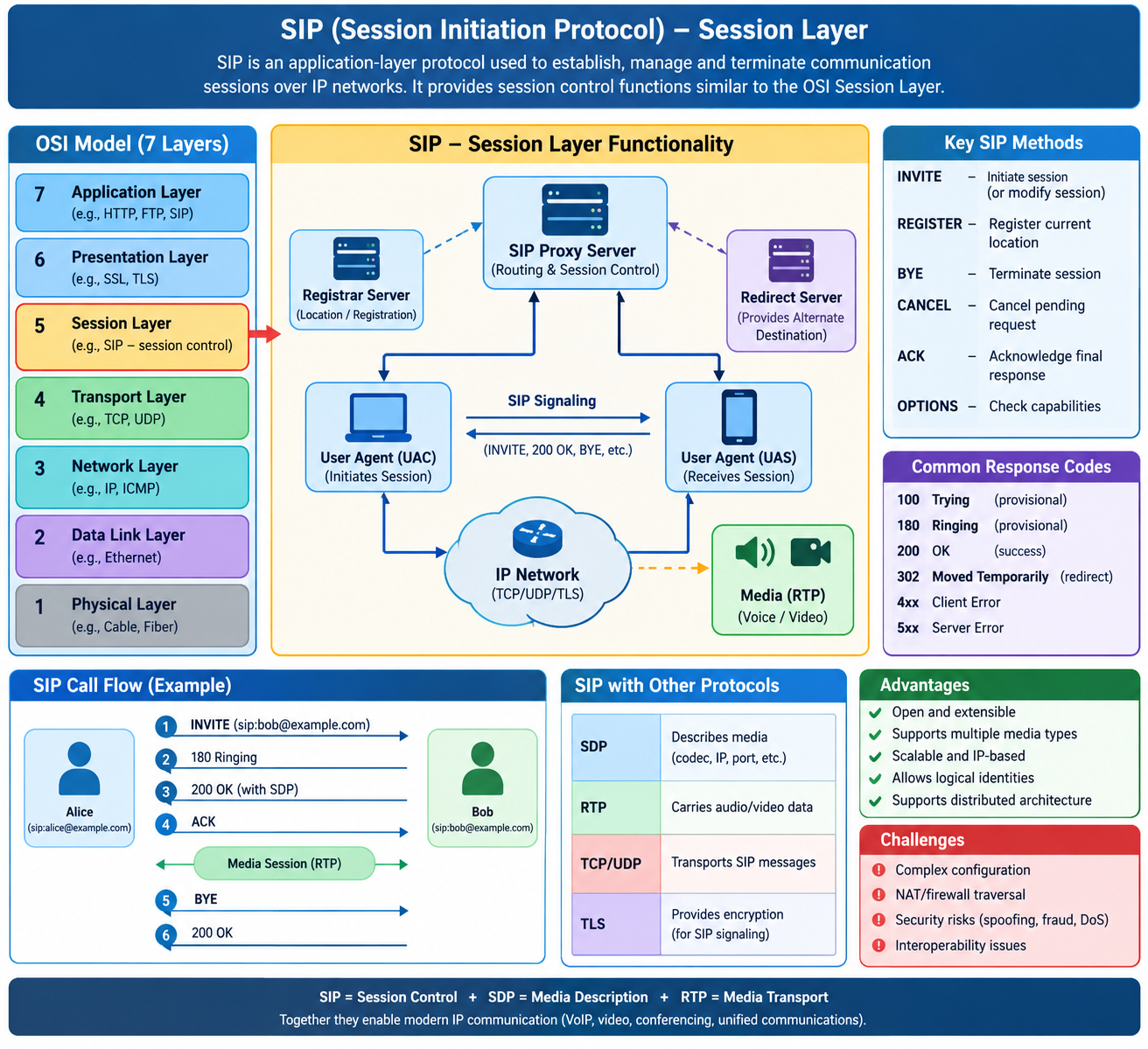
Introduction SIP, or Session Initiation Protocol, is an application-layer signaling protocol used to establish, modify, manage, and terminate communication sessions over Internet Protocol (IP) networks. SIP is widely associated with Voice over IP (VoIP), video calling, instant messaging,....
Read MoreDate: 23rd September 2026, Wednesday | Editor: Techk's Team
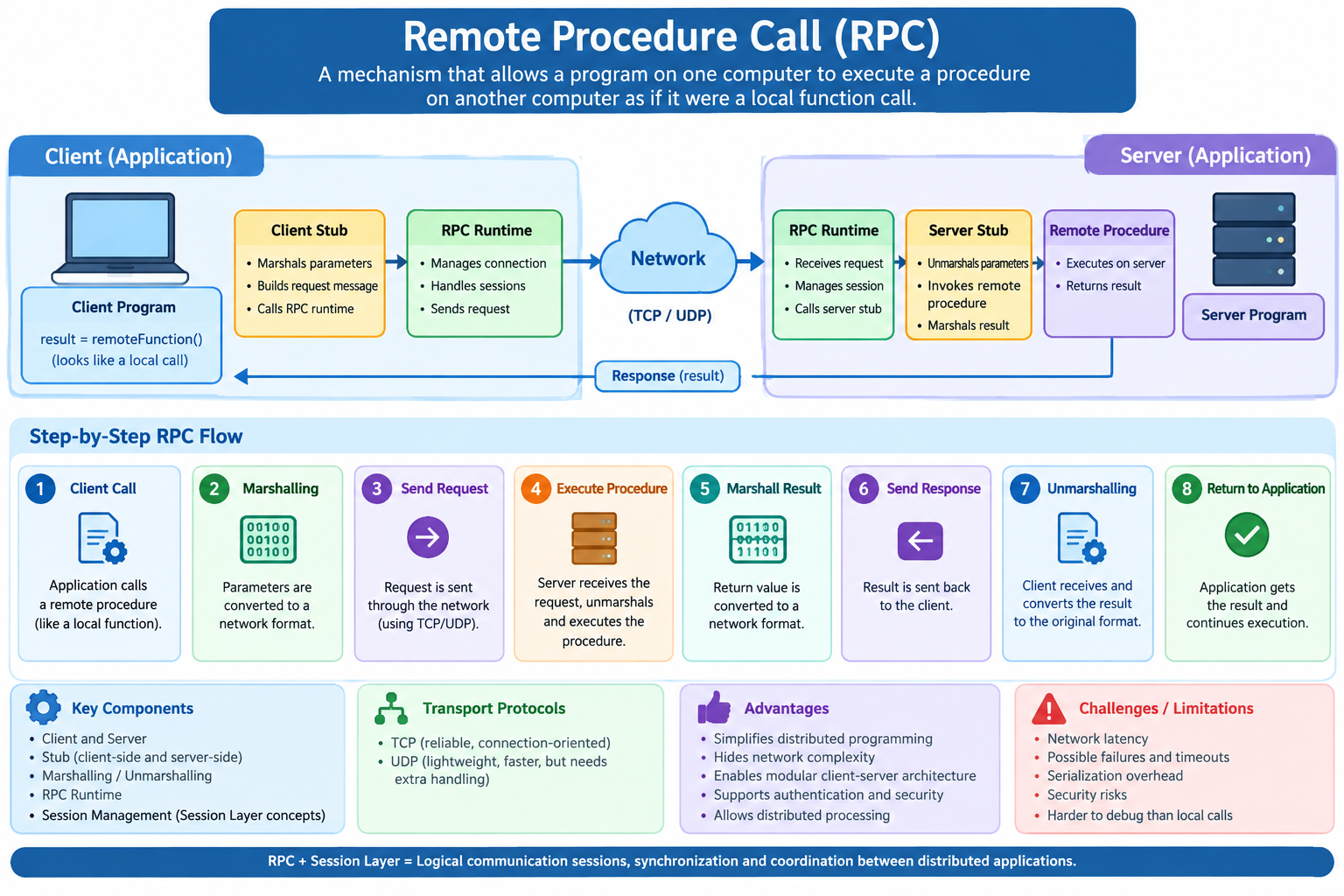
Introduction to RPC Remote Procedure Call (RPC) is a communication mechanism that allows a program on one computer to execute a procedure or function on another computer as though the procedure were a local function call. RPC hides many networking details from the application developer. Instead of....
Read MoreDate: 21st September 2026, Monday | Editor: Techk's Team
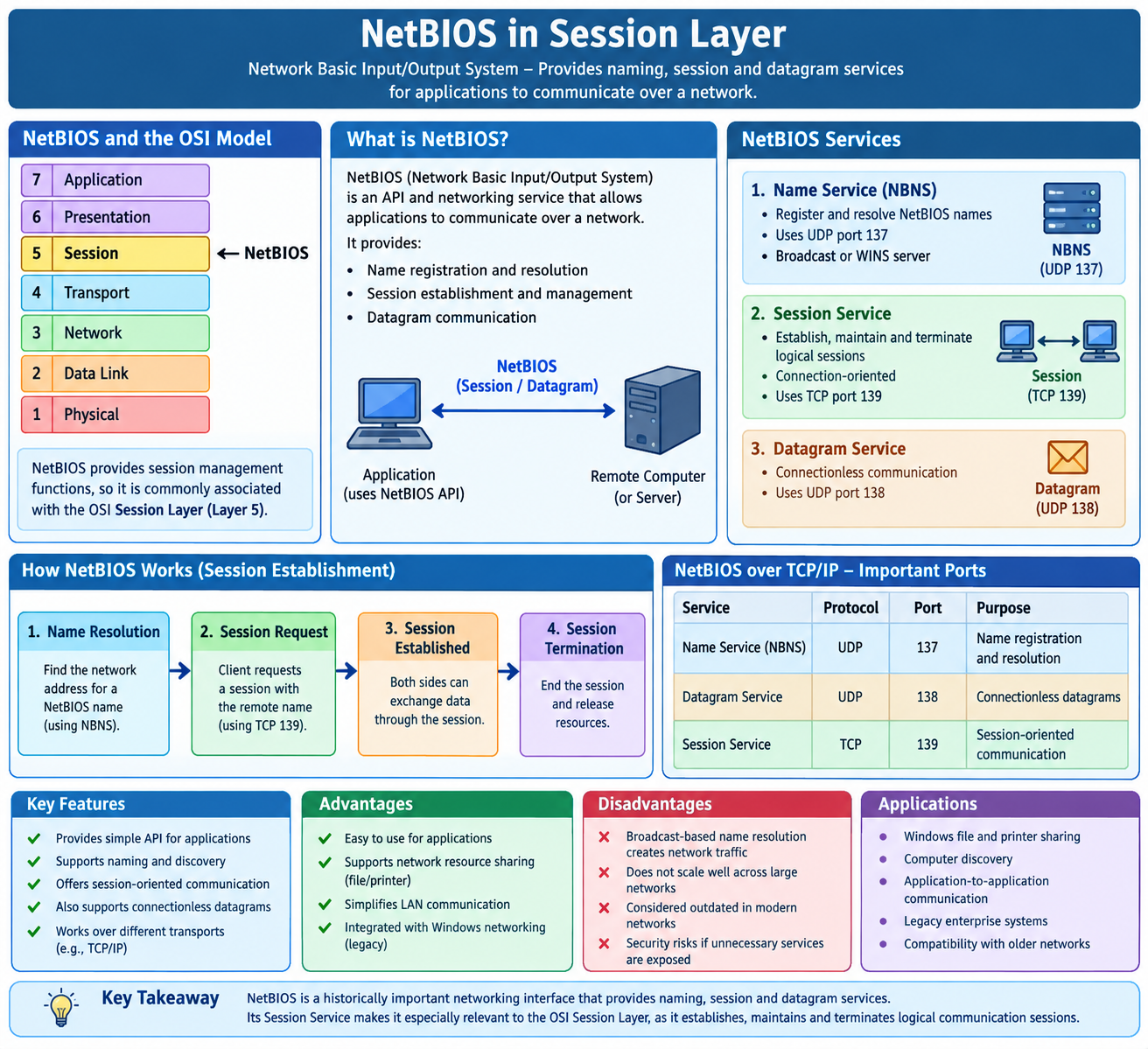
Introduction NetBIOS, which stands for Network Basic Input/Output System, is an application programming interface (API) and communication service originally designed to allow applications on networked computers to communicate with one another. It provides services for name registration, name....
Read MoreDate: 20th September 2026, Sunday | Editor: Techk's Team
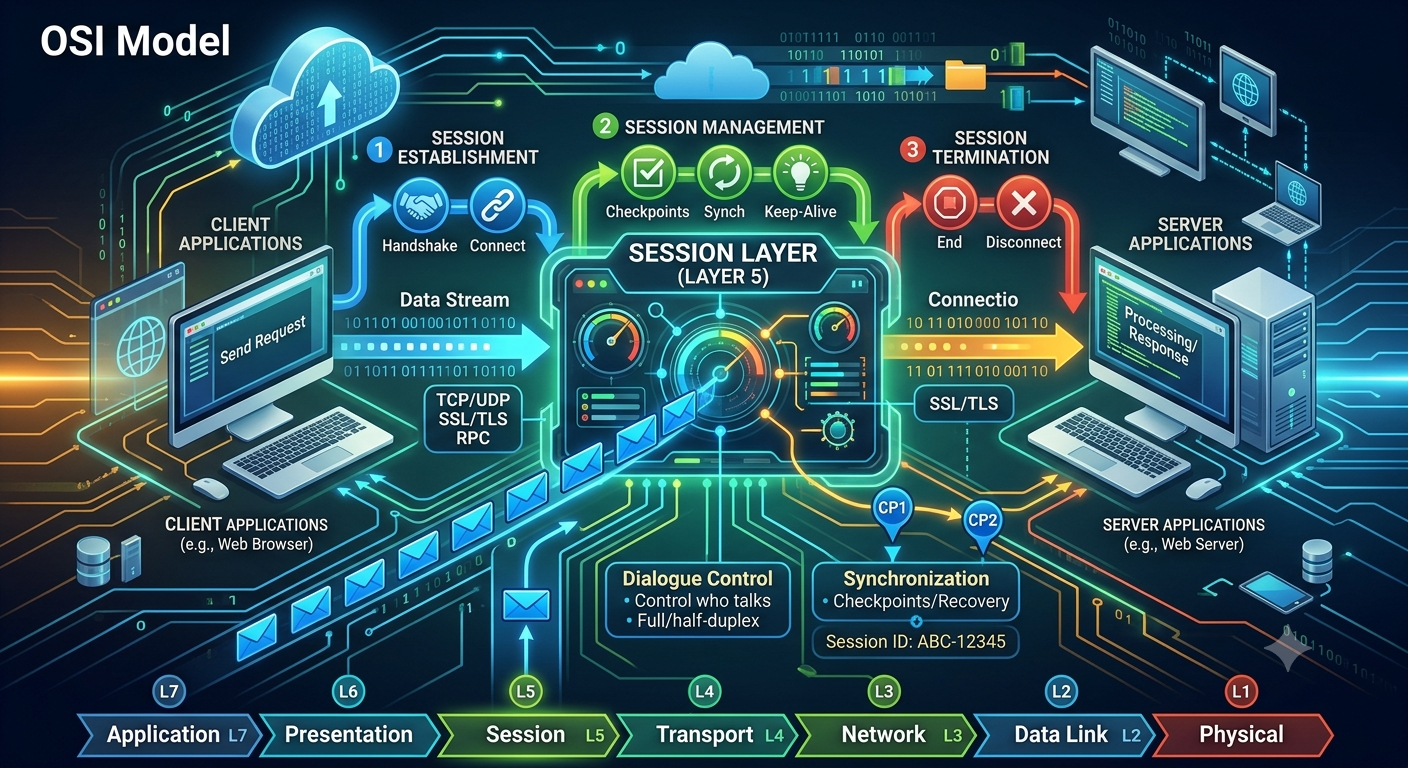
Introduction to the Session Layer The Session Layer is the fifth layer of the OSI (Open Systems Interconnection) model. It is positioned between the Presentation Layer (Layer 6) and the Transport Layer (Layer 4). The primary responsibility of the Session Layer is to establish, manage, synchronize,....
Read MoreDate: 20th September 2026, Sunday | Editor: Techk's Team
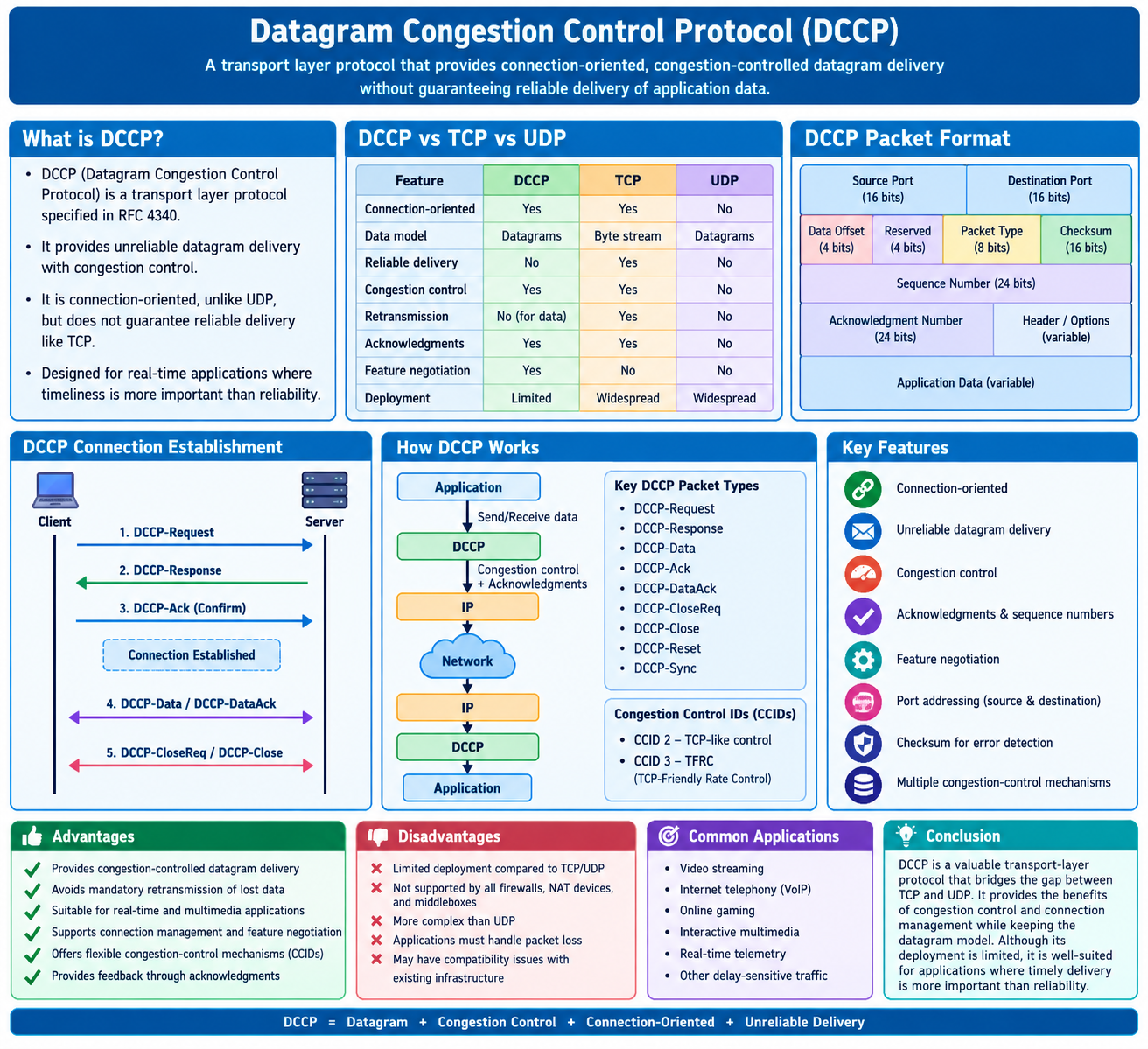
Introduction to DCCP Datagram Congestion Control Protocol (DCCP) is a transport-layer protocol designed to provide applications with unreliable datagram delivery combined with congestion control. It occupies an interesting position between TCP and UDP. UDP provides lightweight datagram....
Read MoreDate: 19th September 2026, Saturday | Editor: Techk's Team
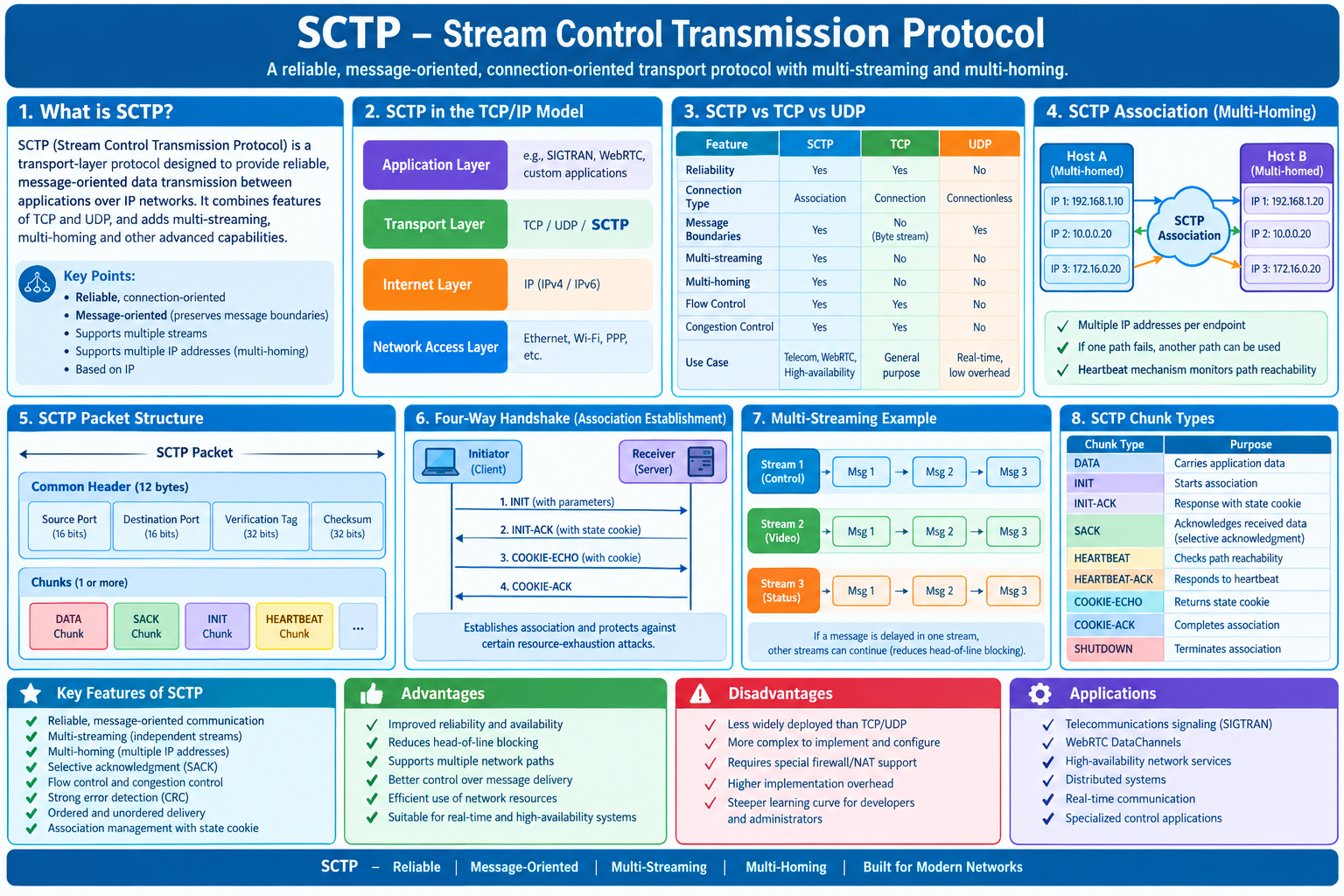
Introduction to SCTP SCTP (Stream Control Transmission Protocol) is a transport-layer communication protocol designed to provide reliable, message-oriented data transmission between applications over IP networks. It was originally developed to transport signaling messages in telecommunications....
Read MoreDate: 19th September 2026, Saturday | Editor: Techk's Team
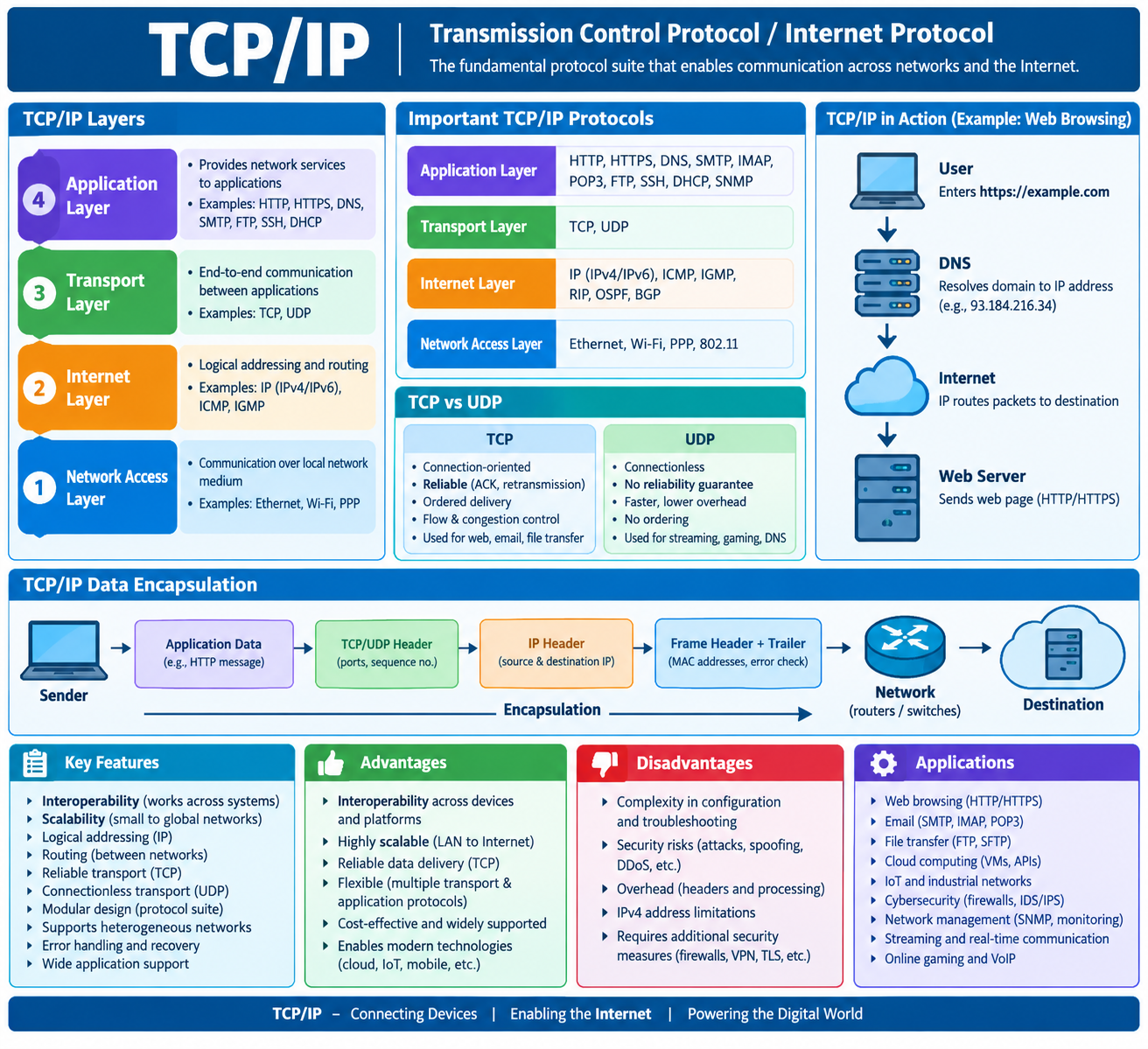
Introduction to TCP/IP TCP/IP stands for Transmission Control Protocol/Internet Protocol. It is the fundamental communication protocol suite used to connect computers, servers, smartphones, IoT devices, network equipment, and other systems over interconnected networks. The modern Internet depends....
Read MoreDate: 18th September 2026, Friday | Editor: Techk's Team
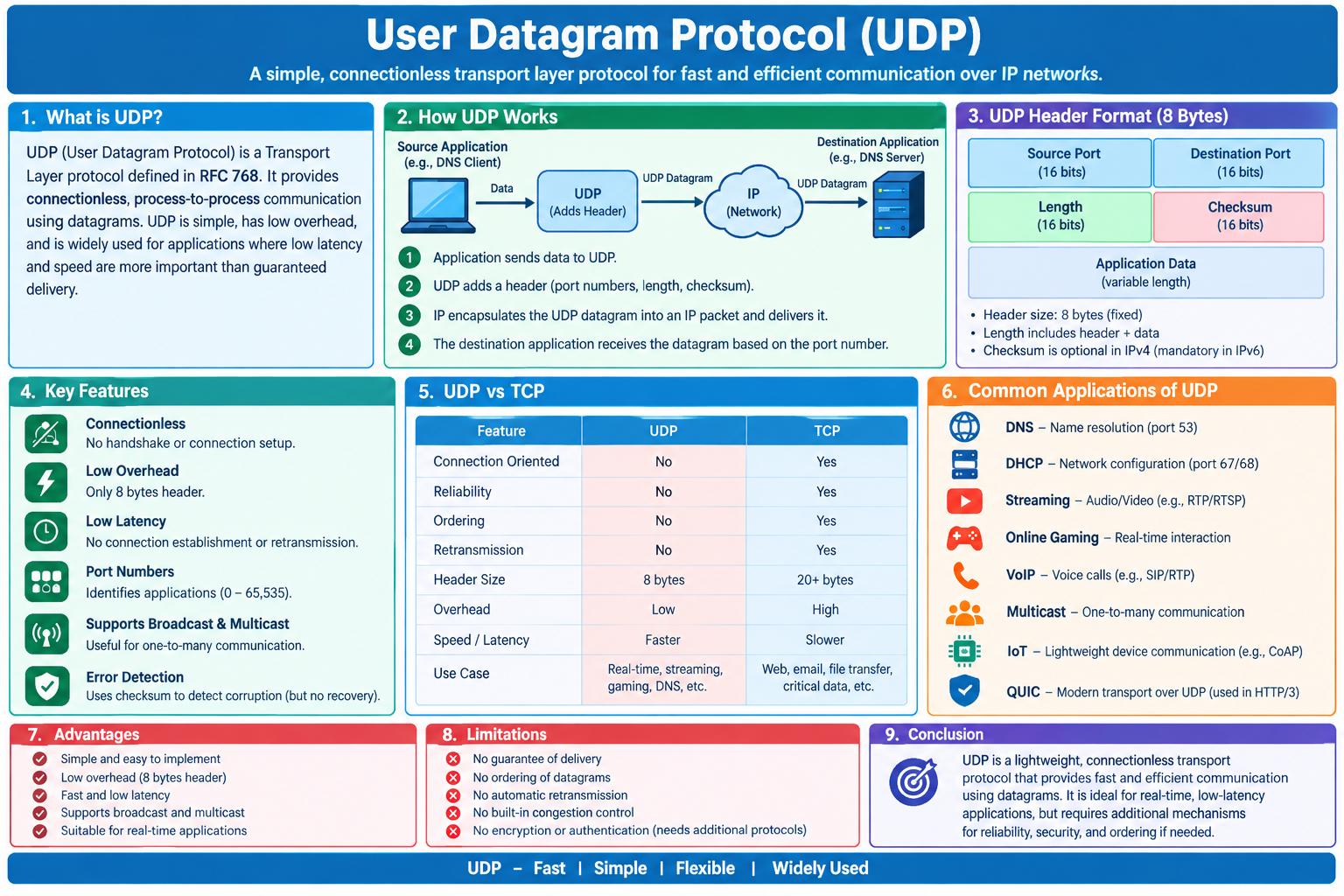
Introduction to UDP UDP (User Datagram Protocol) is a Transport Layer communication protocol used in computer networks and the Internet. It is defined in RFC 768 and provides a simple, connectionless mechanism for sending data between applications. Unlike TCP, UDP does not establish a connection....
Read MoreDate: 18th September 2026, Friday | Editor: Techk's Team
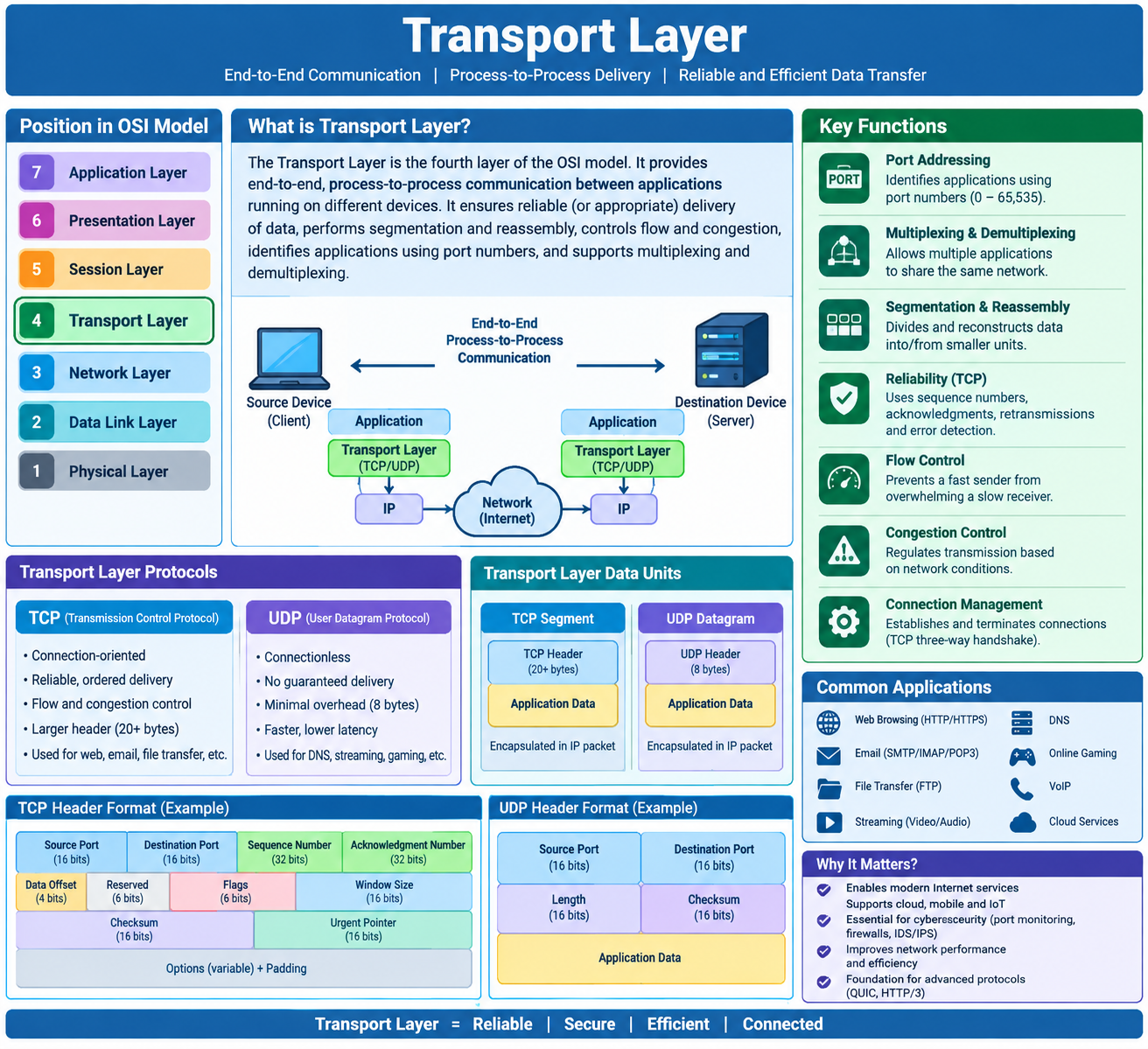
Introduction to the Transport Layer The Transport Layer is the fourth layer of the OSI (Open Systems Interconnection) model and plays a fundamental role in computer networking. It provides end-to-end communication services between applications running on different devices. While lower layers are....
Read MoreDate: 15th September 2026, Tuesday | Editor: Techk's Team
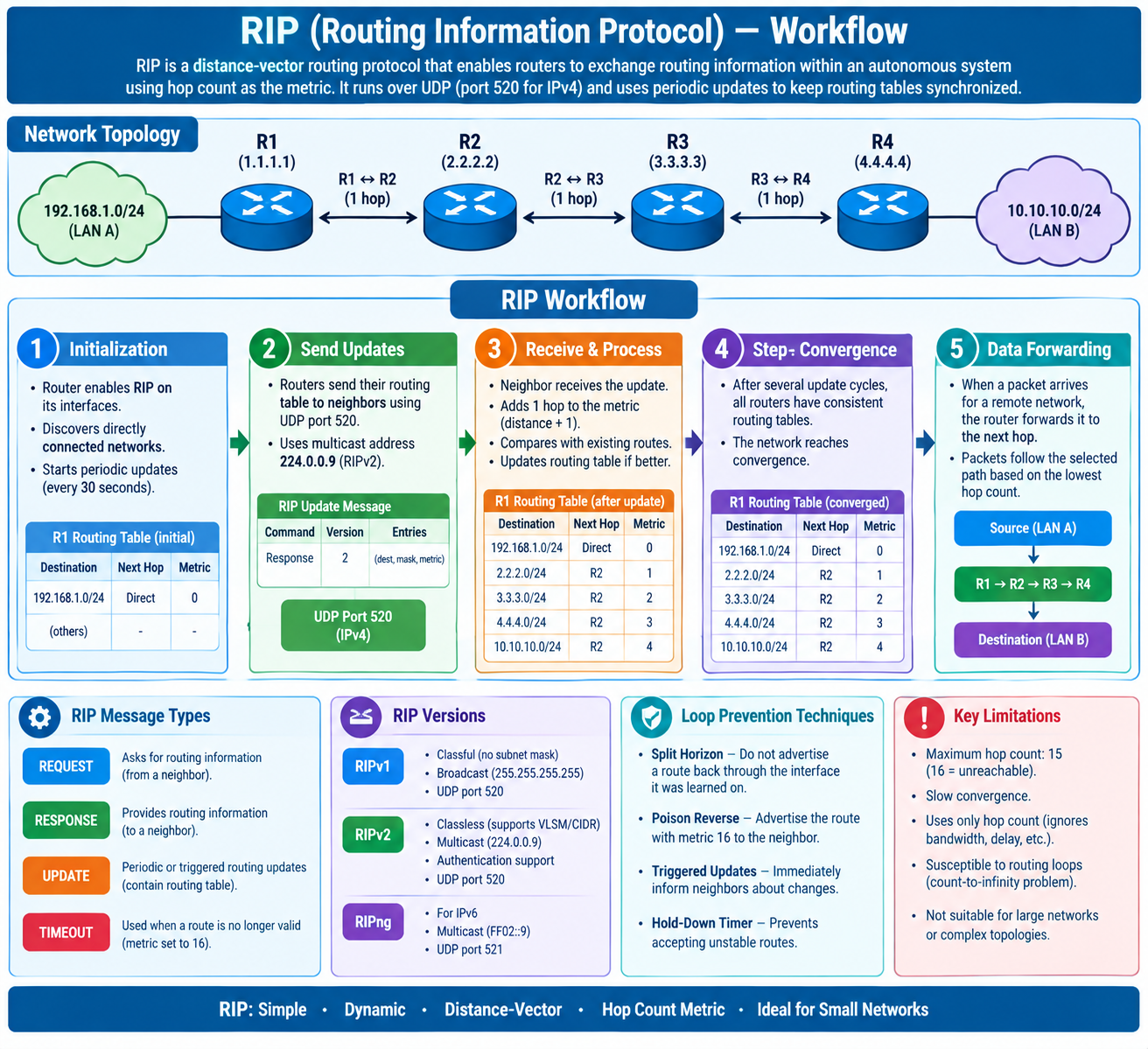
Introduction to RIP Routing Information Protocol (RIP) is a traditional dynamic routing protocol used to exchange routing information between routers within an IP network. It belongs to the family of Interior Gateway Protocols (IGPs) and is designed primarily for routing inside an autonomous....
Read MoreDate: 15th September 2026, Tuesday | Editor: Techk's Team
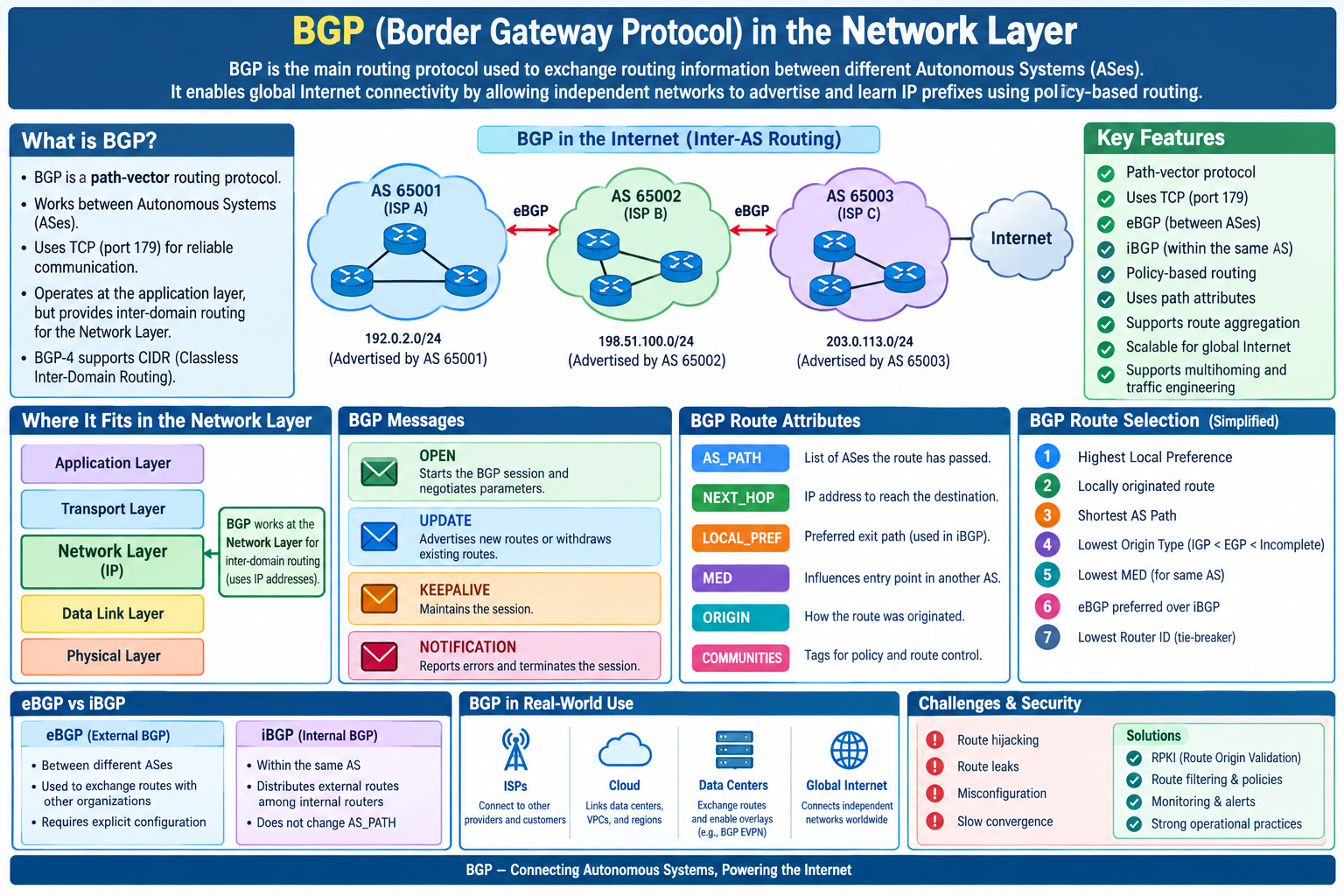
Introduction to BGP Border Gateway Protocol (BGP) is the principal routing protocol used to exchange routing information between different autonomous systems (ASes) on the Internet. Although BGP operates primarily at the application layer over TCP from a protocol-stack perspective, it performs a....
Read MoreDate: 31st August 2026, Monday | Editor: Techk's Team
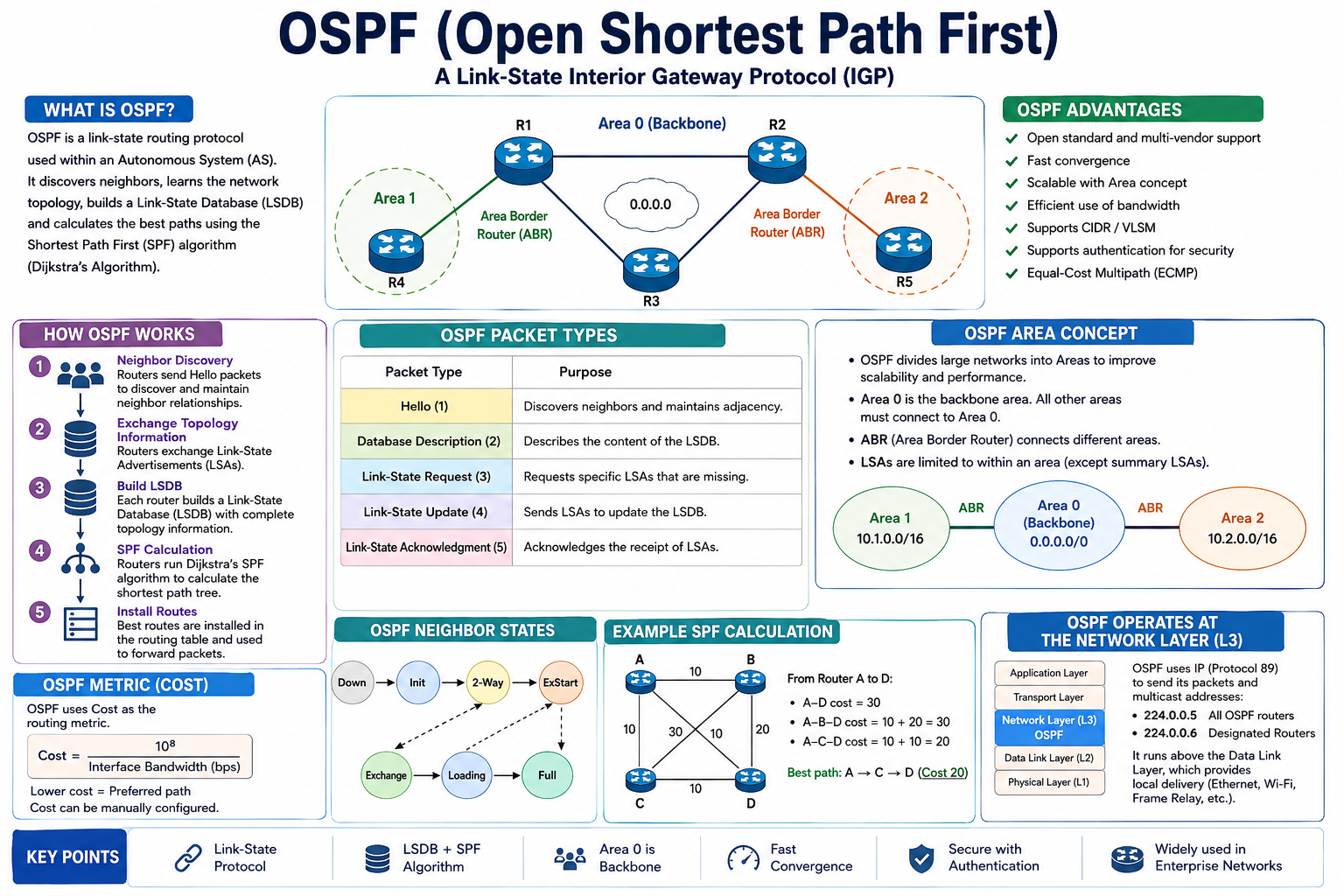
Introduction to OSPF OSPF, or Open Shortest Path First, is one of the most important routing protocols used in modern computer networks. However, an important clarification is necessary at the beginning: OSPF does not operate at the Data Link Layer. OSPF is primarily a Network Layer (Layer 3)....
Read MoreDate: 29th August 2026, Saturday | Editor: Techk's Team
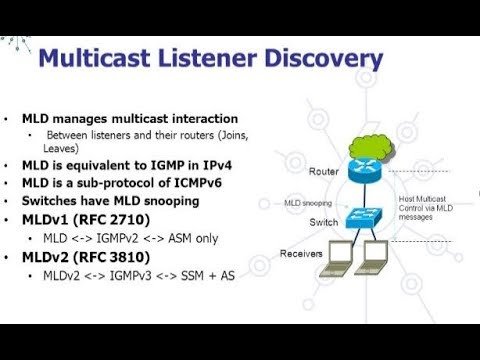
Introduction to Multicast Listener Discovery (MLD) Multicast Listener Discovery (MLD) is an important protocol used in IPv6 networks to manage multicast group membership. It allows IPv6 hosts and routers to communicate about which multicast groups are being listened to by devices on a network. MLD....
Read MoreDate: 29th August 2026, Saturday | Editor: Techk's Team
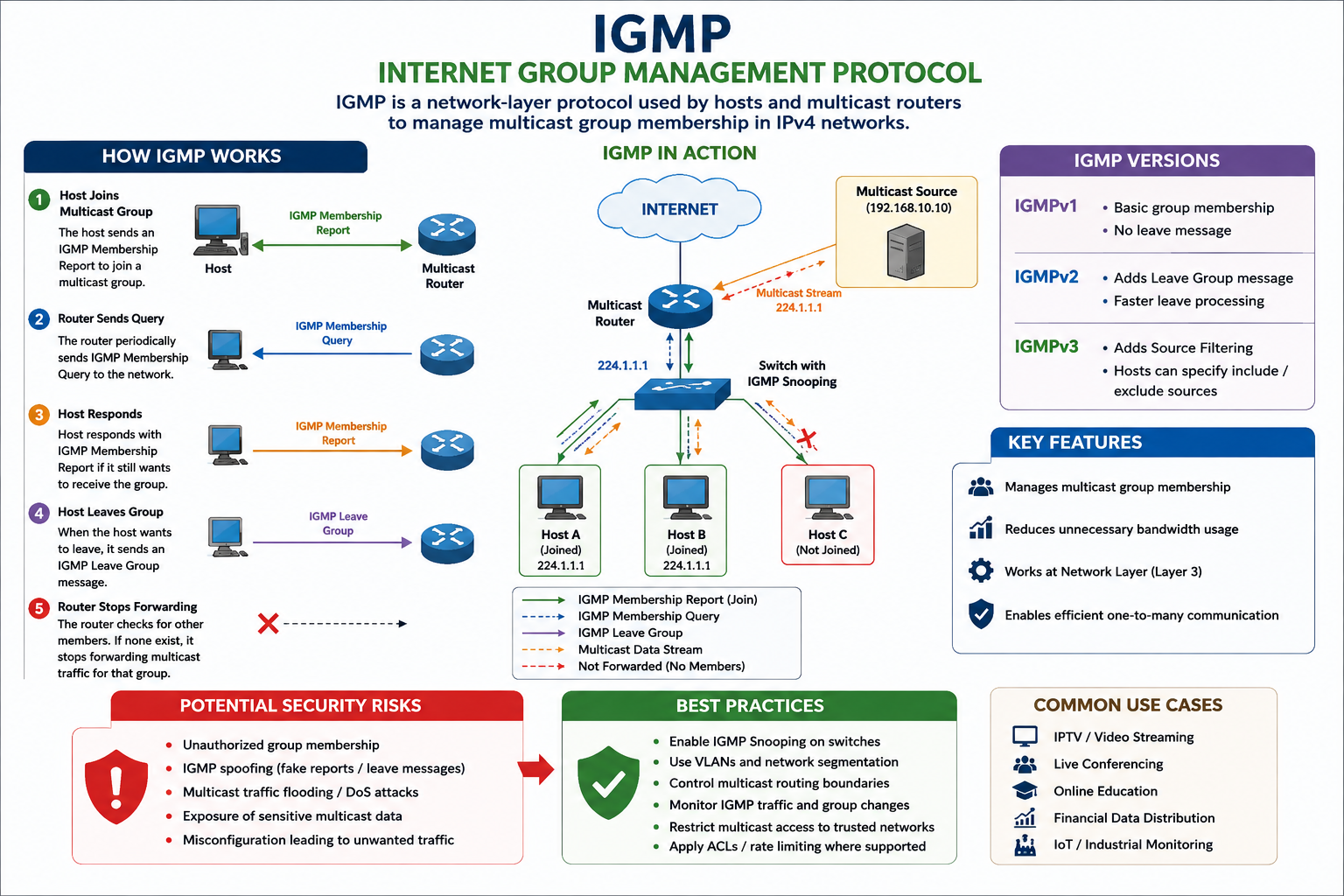
Introduction to IGMP Internet Group Management Protocol (IGMP) is a network-layer communication protocol used primarily in IPv4 networks to manage multicast group membership. Multicast allows a single source to transmit data to multiple receivers simultaneously without sending an individual copy....
Read MoreDate: 29th August 2026, Saturday | Editor: Techk's Team
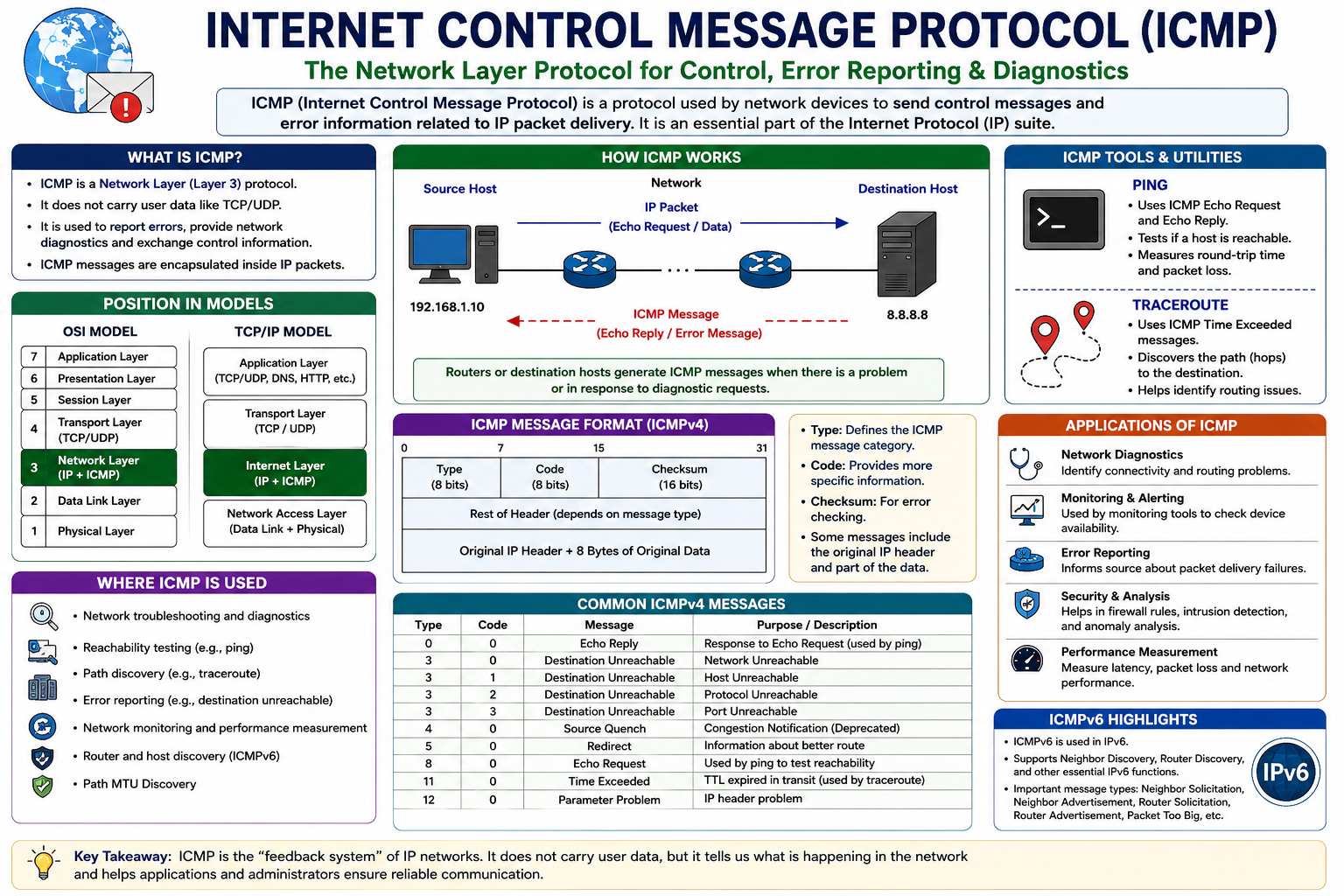
Introduction to ICMP ICMP (Internet Control Message Protocol) is an important protocol used in IP-based computer networks for sending control, diagnostic, error-reporting, and status messages. ICMP works closely with the Internet Protocol (IP) and is commonly associated with the Network Layer....
Read MoreDate: 29th August 2026, Saturday | Editor: Techk's Team
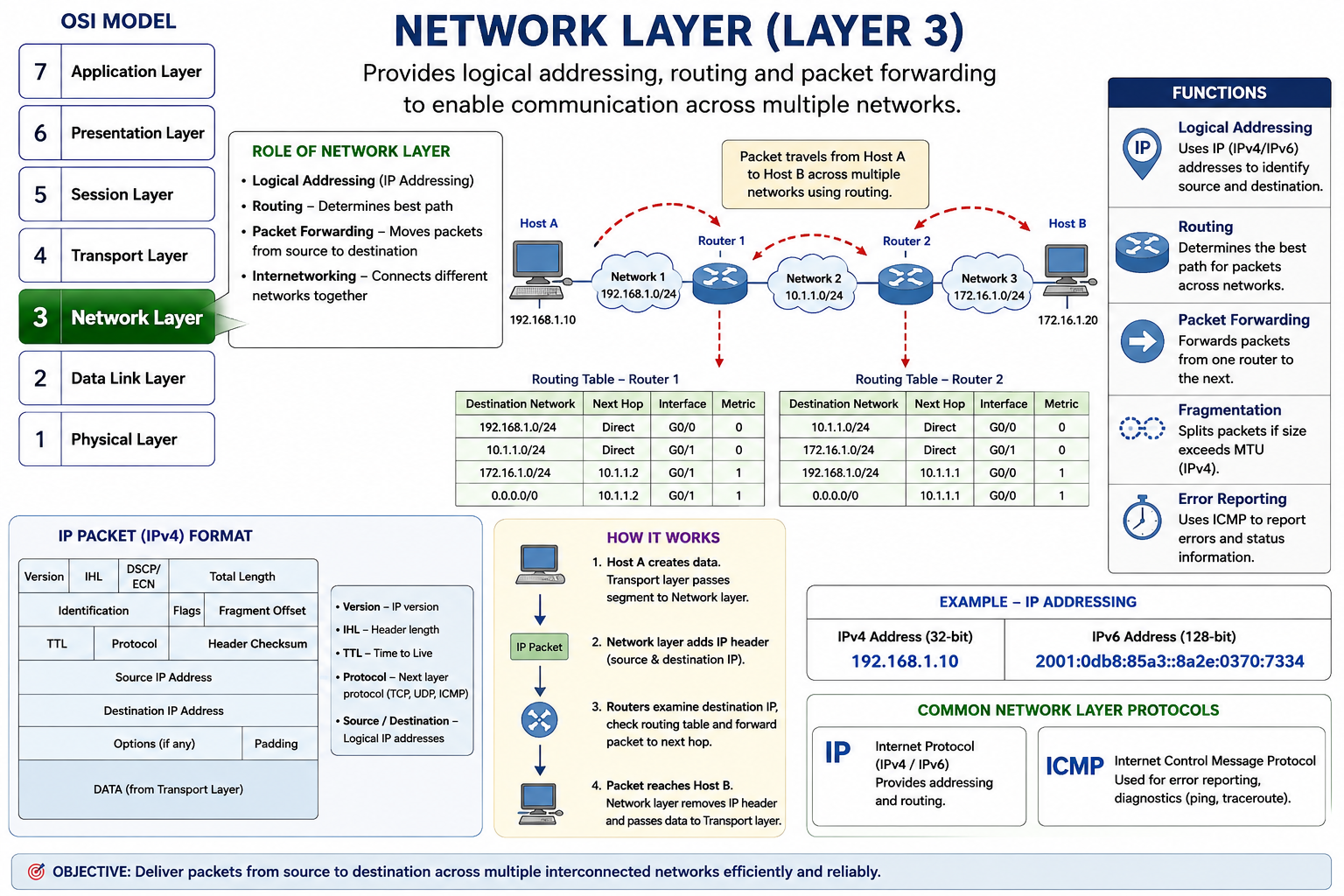
Introduction to the Network Layer The Network Layer is the third layer of the OSI (Open Systems Interconnection) model and plays a fundamental role in computer networking. It is positioned above the Data Link Layer and below the Transport Layer. The primary responsibility of the Network Layer is....
Read MoreDate: 28th August 2026, Friday | Editor: Techk's Team
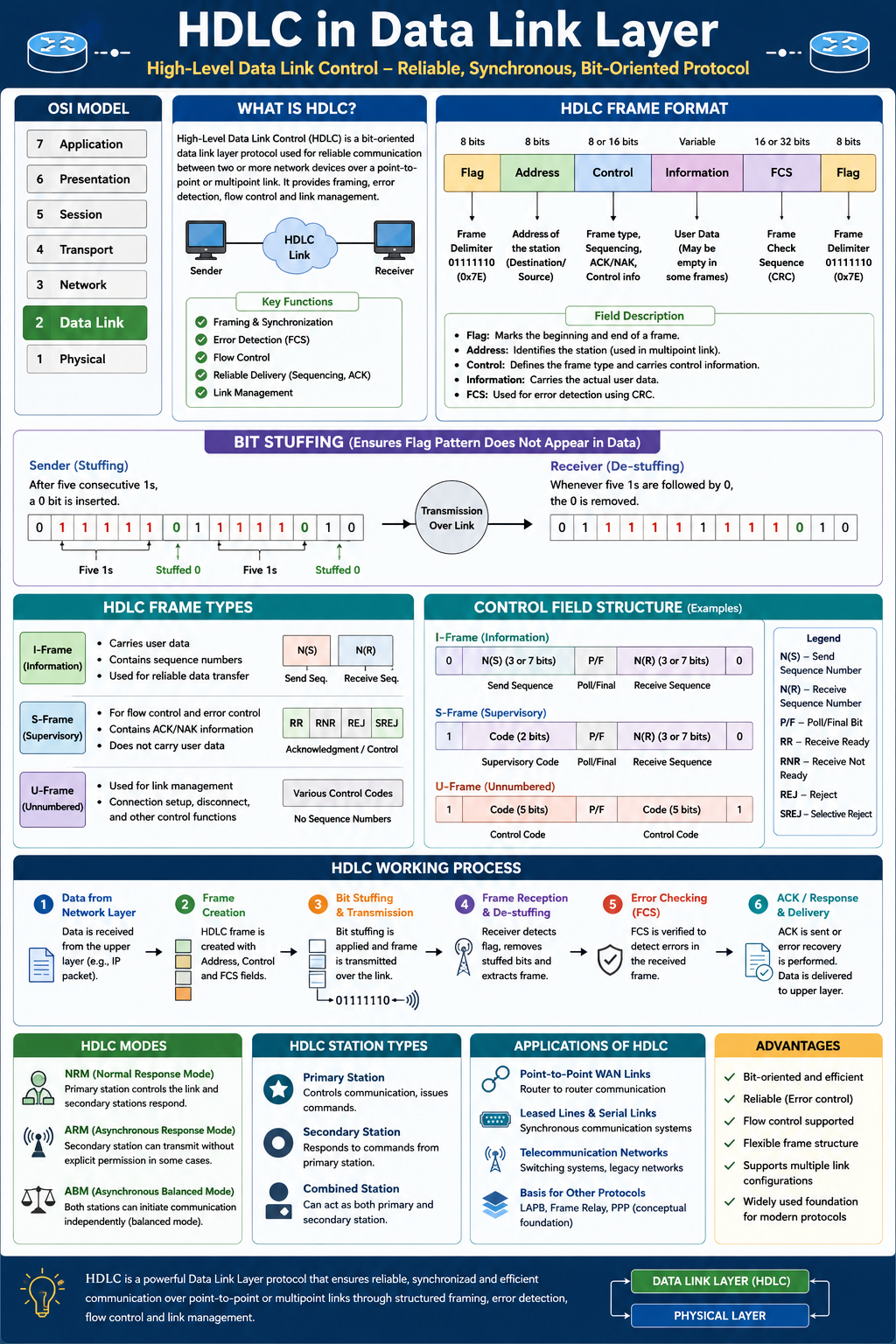
1. Introduction to HDLC in the Data Link Layer High-Level Data Link Control (HDLC) is a bit-oriented data link layer protocol used for reliable communication between two or more network devices over a data communication link. HDLC operates at Layer 2 of the OSI model, also known as the Data Link....
Read MoreDate: 28th August 2026, Friday | Editor: Techk's Team
.png)
The IEEE 802.11 standard defines the specifications for Wireless Local Area Networks (WLANs), operating primarily across the physical layer and the Data Link Layer of the Open Systems Interconnection (OSI) model. Within the Data Link Layer, 802.11 is tasked with converting raw physical signals....
Read MoreDate: 27th August 2026, Thursday | Editor: Techk's Team
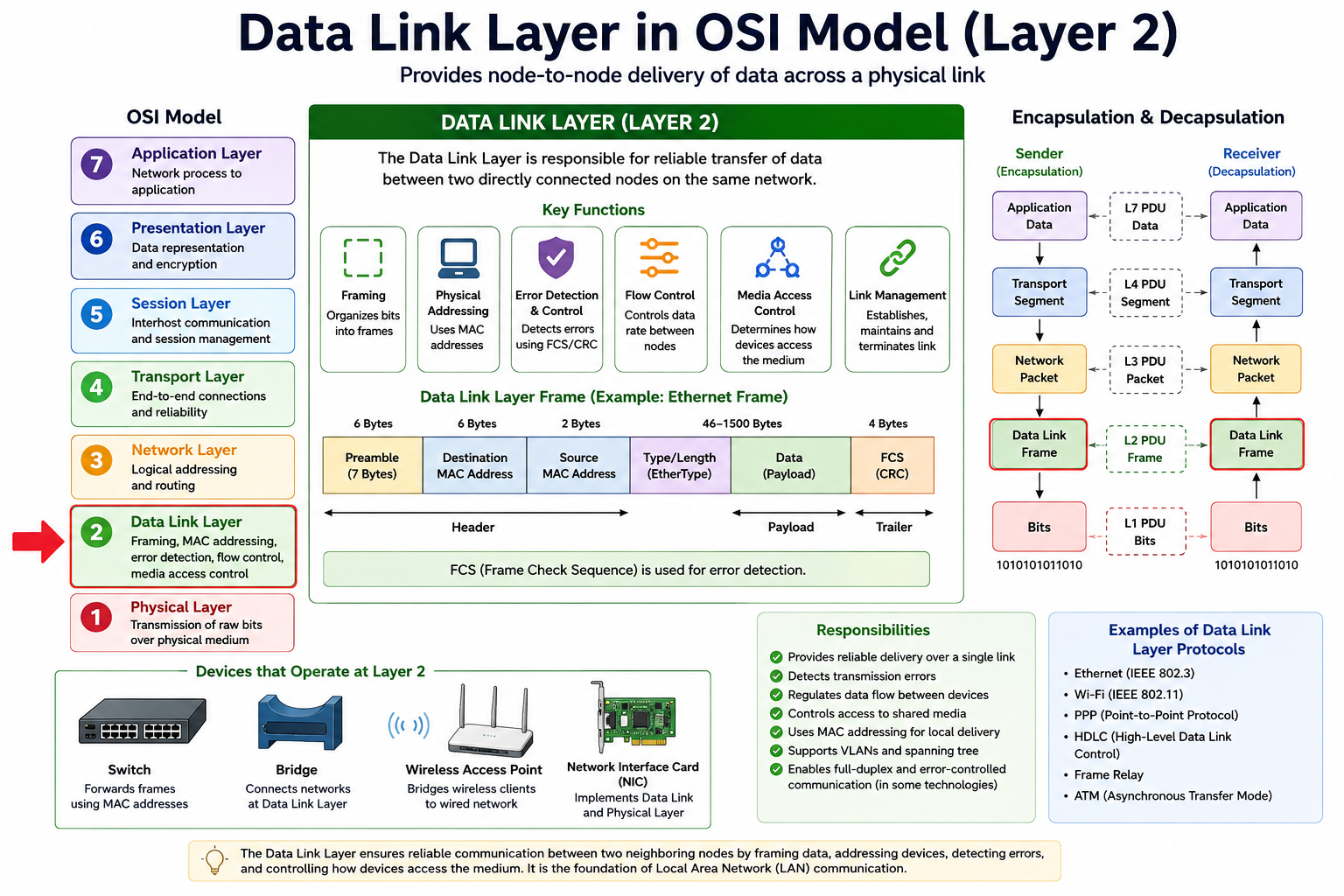
Introduction The Physical Layer is the first and lowest layer of the Open Systems Interconnection (OSI) model and provides the fundamental foundation for communication between network devices. Its primary responsibility is to transmit raw bits—zeros and ones—over a physical....
Read MoreDate: 26th August 2026, Wednesday | Editor: Techk's Team
1. Introduction to the Data Link Layer The Data Link Layer is the second layer of the OSI (Open Systems Interconnection) model and plays a fundamental role in computer networking. Positioned between the Physical Layer and the Network Layer, it is responsible for providing reliable communication....
Read MoreDate: 26th August 2026, Wednesday | Editor: Techk's Team
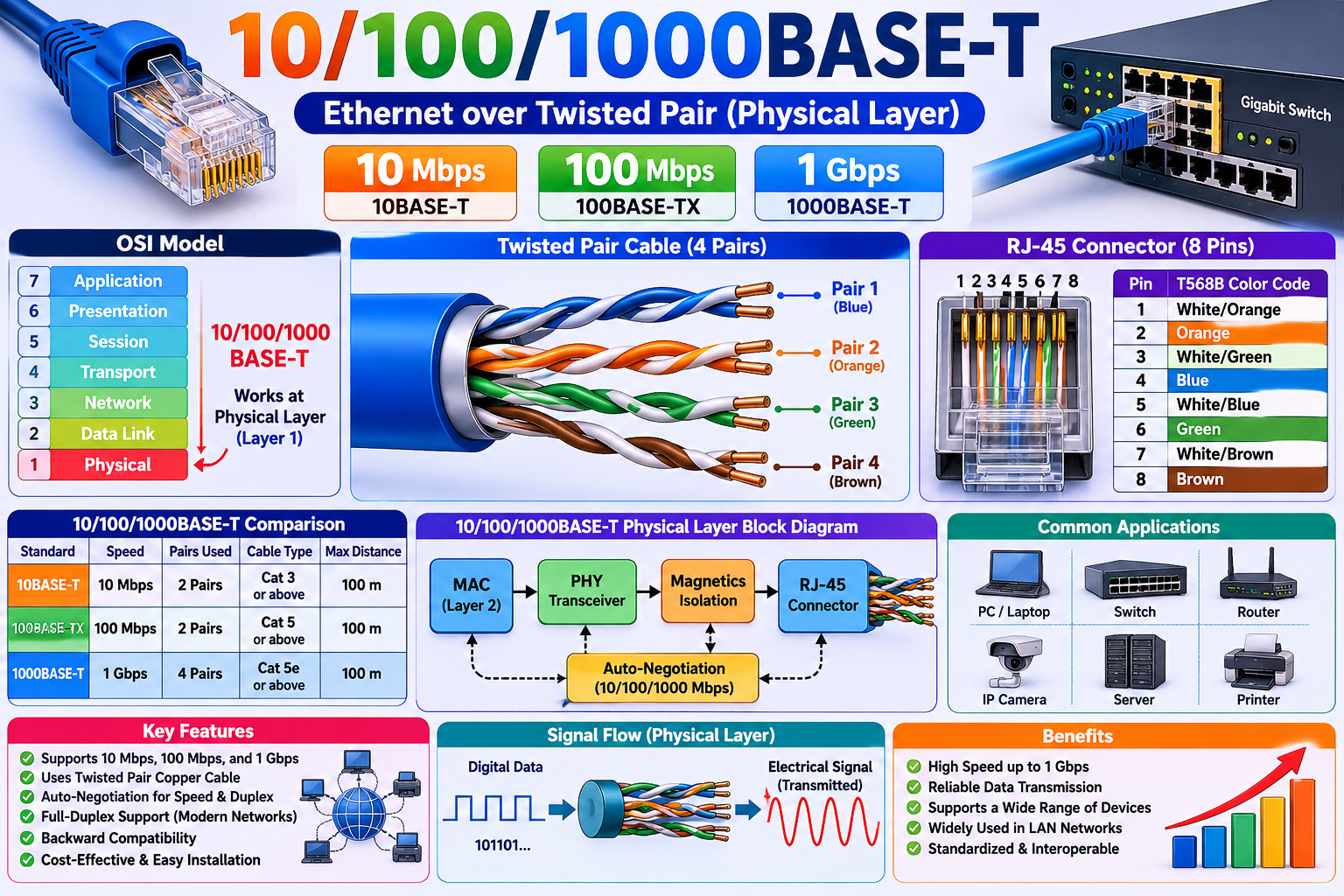
Introduction 10/100/1000BASE-T is one of the most widely used Ethernet technologies for connecting computers, servers, switches, routers, access points, IP cameras, printers, and other network devices over copper twisted-pair cables. It is commonly associated with Ethernet physical-layer....
Read MoreDate: 25th August 2026, Tuesday | Editor: Techk's Team
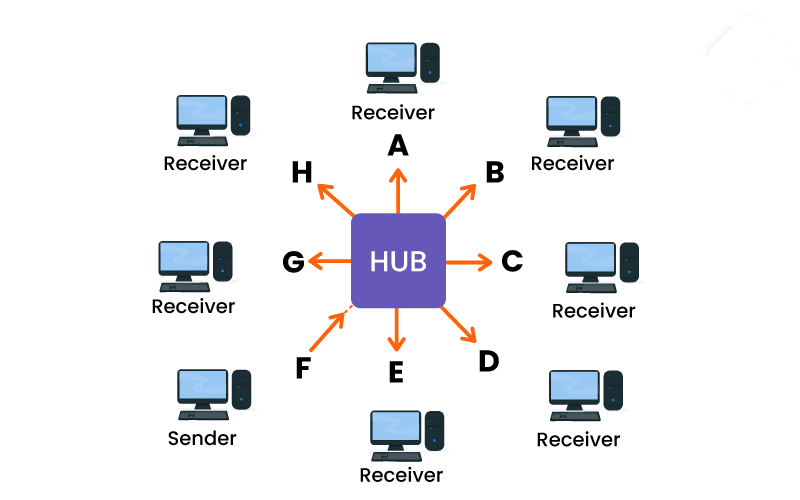
1. Introduction A hub is a basic networking device that operates primarily at Layer 1, the Physical Layer, of the OSI (Open Systems Interconnection) model. It is used to connect multiple computers, network devices, or communication nodes within a local area network (LAN). Unlike intelligent....
Read MoreDate: 21st August 2026, Friday | Editor: Techk's Team
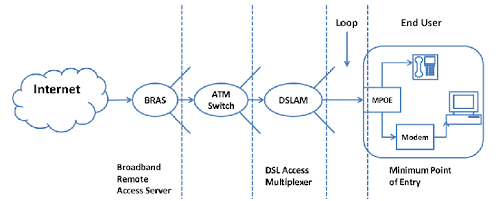
Introduction Digital Subscriber Line (DSL) is a family of broadband communication technologies designed to provide high-speed digital data transmission over the existing copper twisted-pair telephone infrastructure. DSL operates primarily at the Physical Layer (Layer 1) of the OSI reference model....
Read MoreDate: 18th August 2026, Tuesday | Editor: Techk's Team
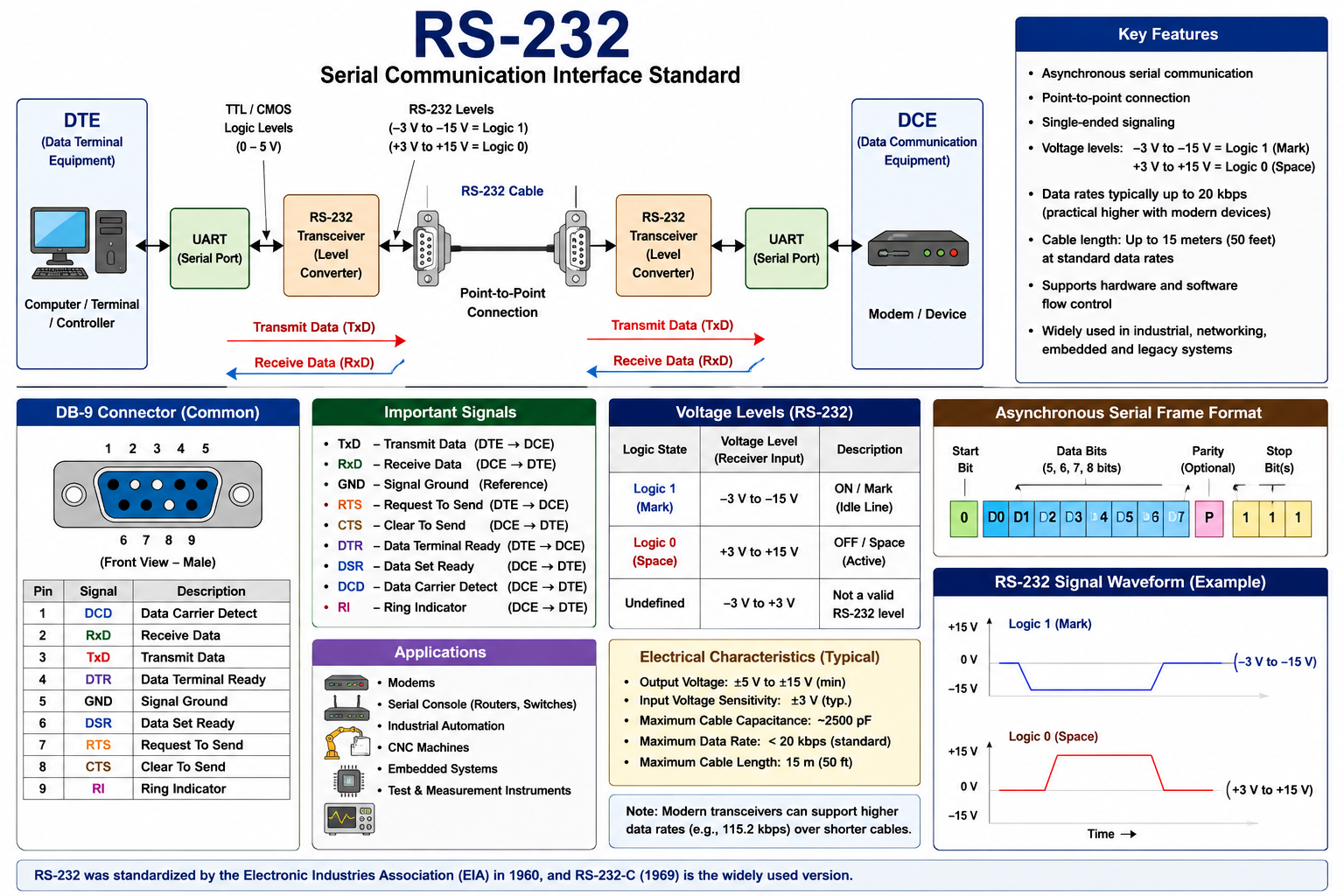
1. Introduction RS-232 is one of the most historically important standards for serial communication between computers, terminals, modems, and other electronic devices. It defines the electrical, functional, and mechanical characteristics required for exchanging serial binary data between two....
Read MoreDate: 18th August 2026, Tuesday | Editor: Techk's Team
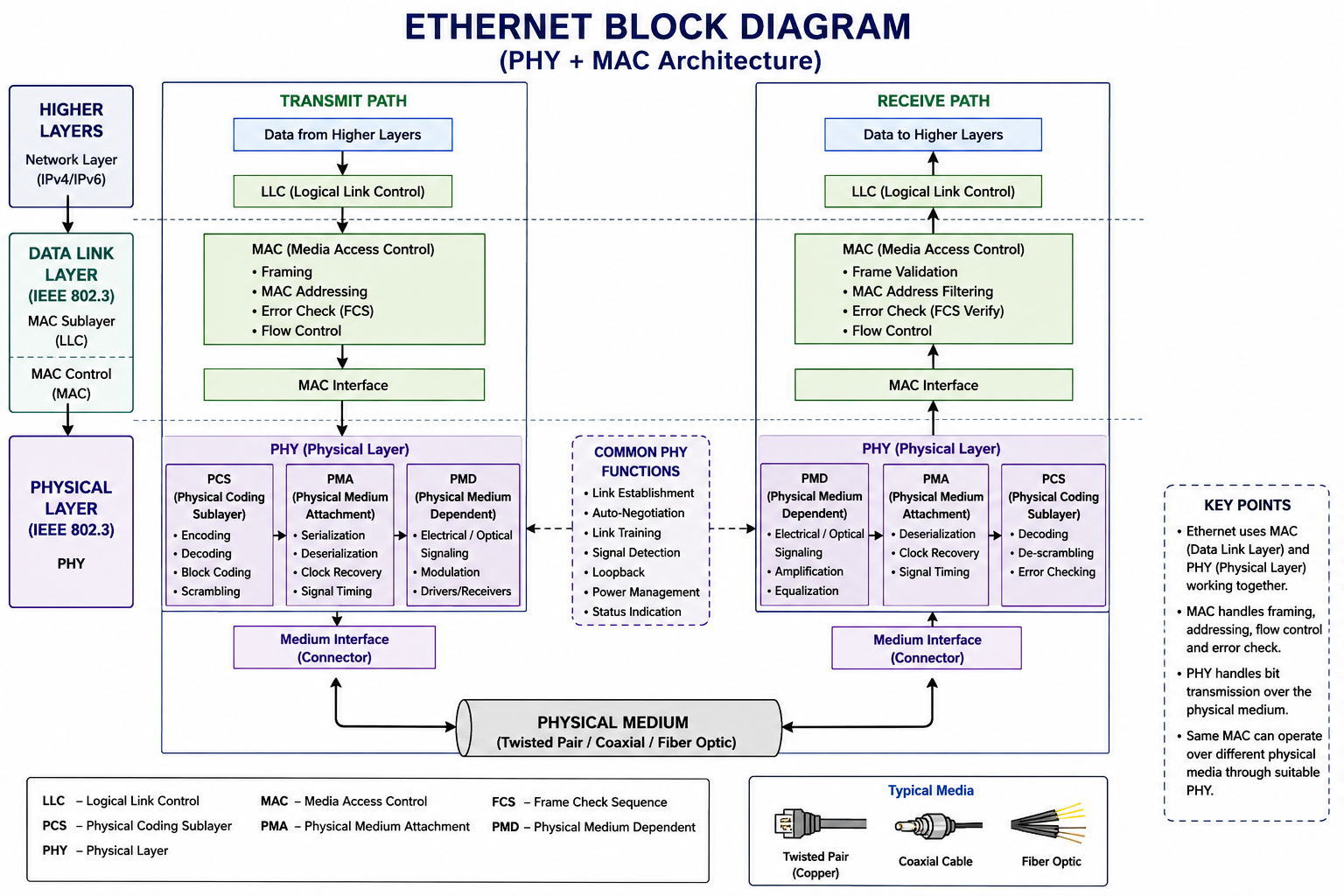
1. Introduction Ethernet is one of the most widely deployed technologies for computer networking and forms a fundamental part of modern Local Area Networks (LANs). Although Ethernet is commonly discussed as a Data Link Layer technology, its operation extends into the Physical Layer, where it....
Read MoreDate: 17th August 2026, Monday | Editor: Techk's Team
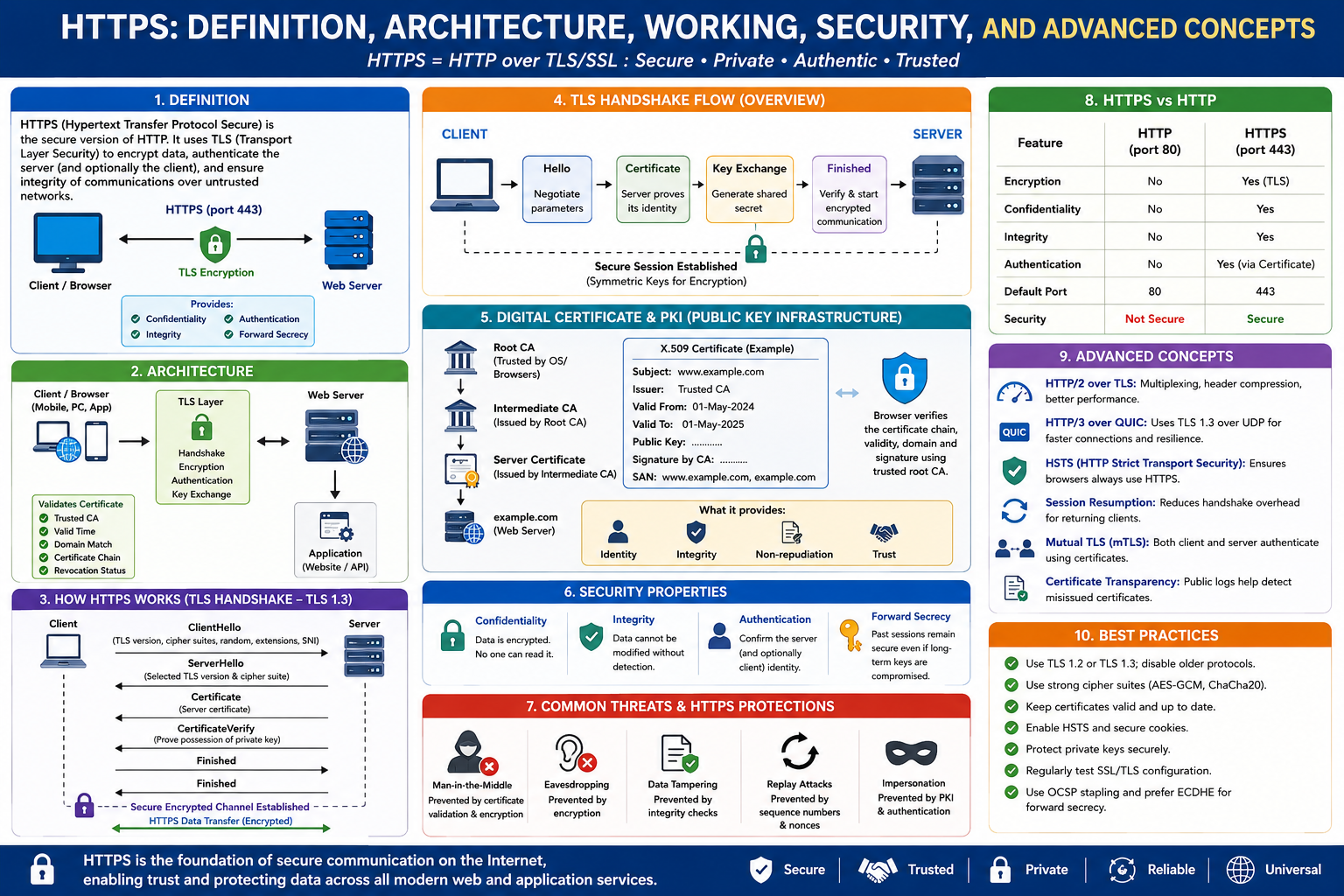
1. Introduction HTTPS, or Hypertext Transfer Protocol Secure, is the secure version of HTTP used for communication between web browsers, mobile applications, APIs, and web servers. It protects data exchanged over a network by combining HTTP with TLS (Transport Layer Security). HTTPS is fundamental....
Read MoreDate: 17th August 2026, Monday | Editor: Techk's Team
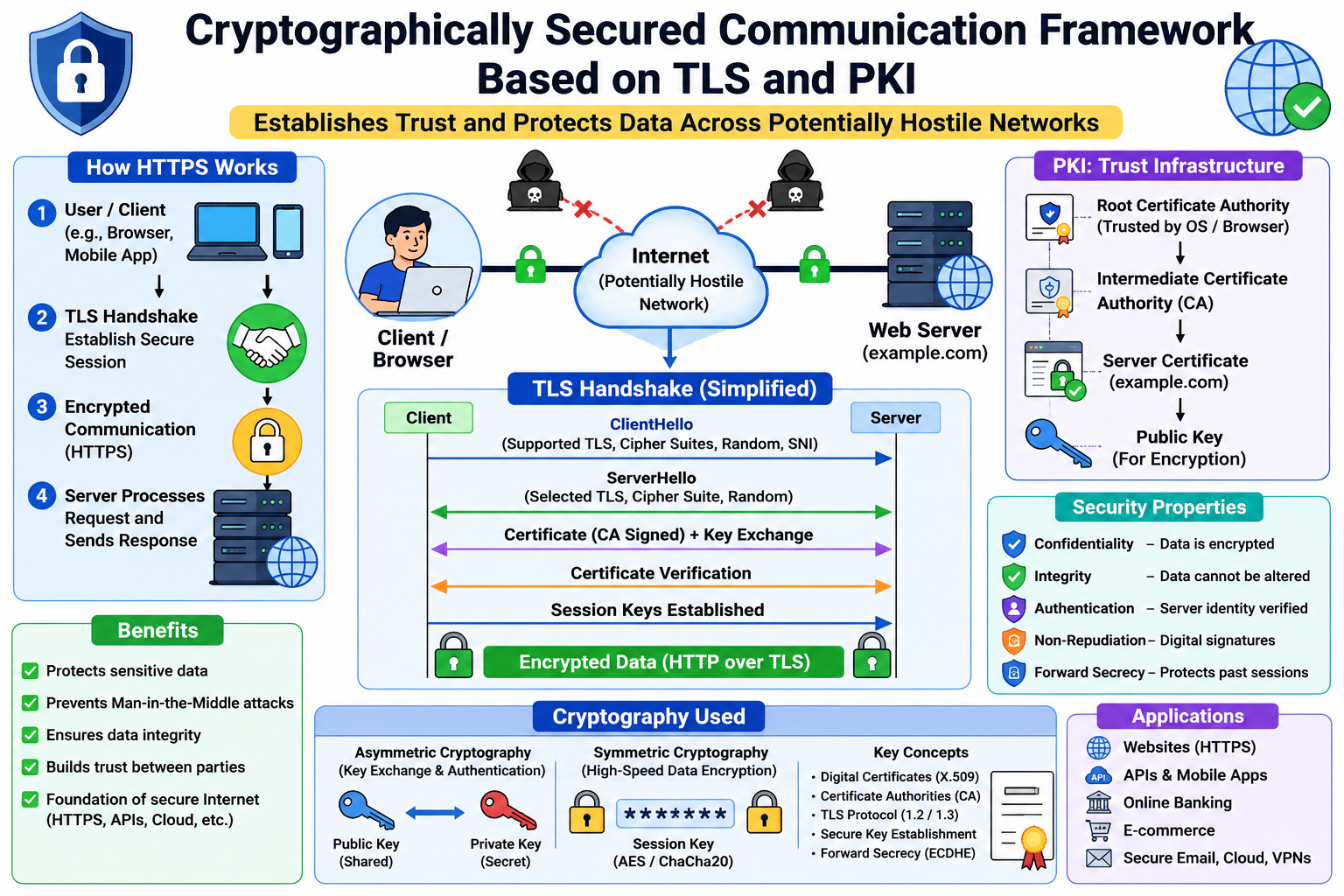
Introduction A cryptographically secured communication framework based on Transport Layer Security (TLS) and Public Key Infrastructure (PKI) is a fundamental component of modern network and cybersecurity architecture. It provides a systematic mechanism for establishing trust between communicating....
Read MoreDate: 20th July 2025, Sunday | Editor: Techk's Team
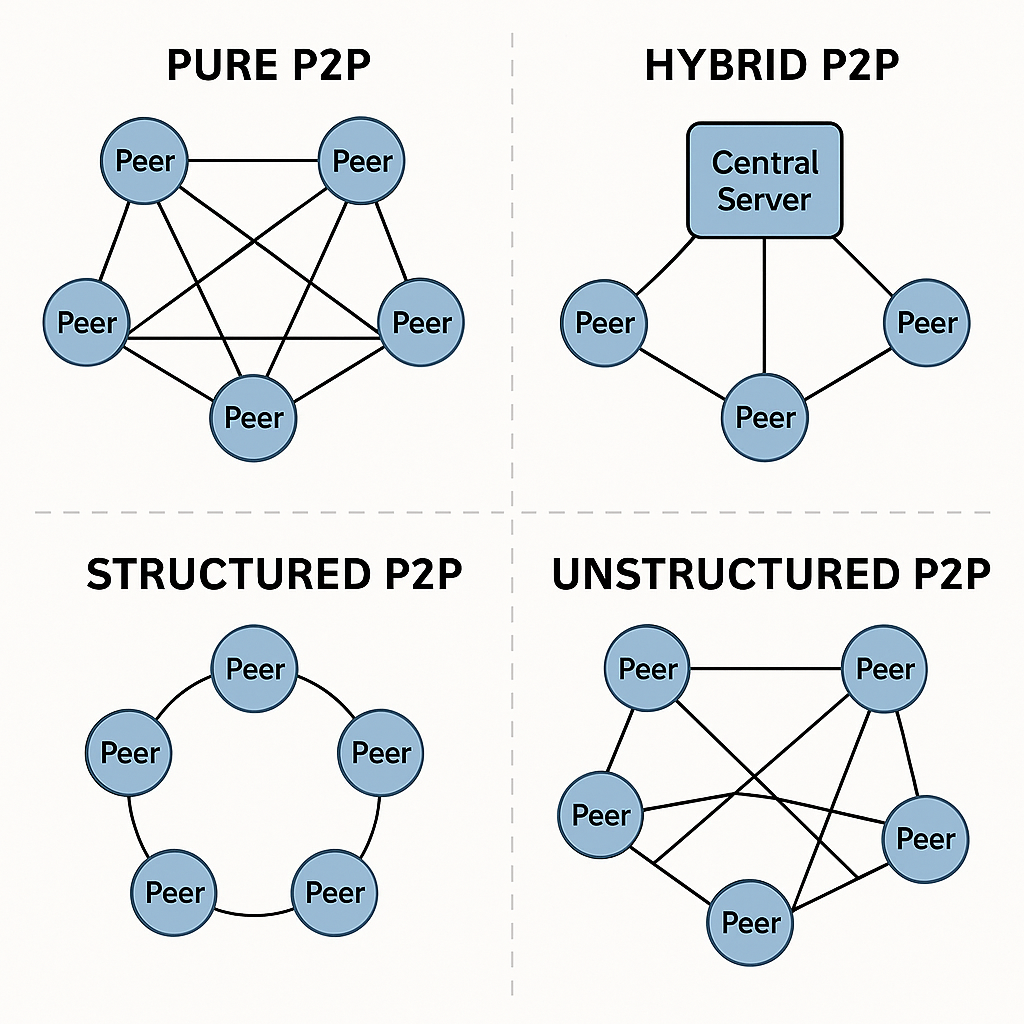
A Peer-to-Peer (P2P) protocol is a communication model where each participant (called a peer) acts both as a client and a server. This means that every node can initiate or complete data exchanges, without relying on a centralized server. Key Characteristics: Decentralization: No central....
Read MoreDate: 9th July 2025, Wednesday | Editor: Techk's Team
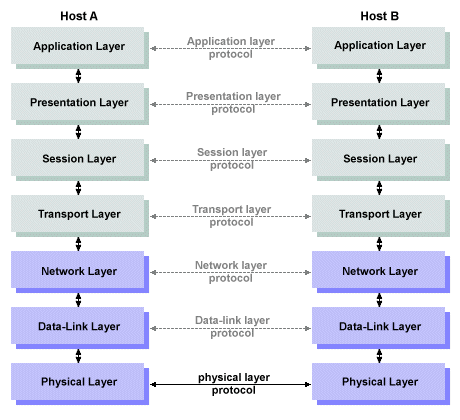
What is OSI Model? The OSI Model (Open Systems Interconnection Model) is a conceptual framework that explains how data travels from one computer to another in a network. It divides the process of communication between two devices into 7 different layers, where each layer has a specific....
Read MoreDate: 4th October 2021, Monday | Editor: KT Team

Protocol is a software that resides either in a computer’s memory or in the memory of a transmission device, like a network interface card. When data is ready for transmission, this software is executed. The software prepares data for transmission and sets the transmission in motion. At the....
Read MoreDate: 28th September 2021, Tuesday | Editor: KT Team

IP stance for Internet Protocol is a build single logical network from multiple physical networks. In other words, IP exist in network layer shields the higher levels from the typical network architecture below it. Thus, Internet Protocol (IP) is the most significant protocol. The higher layers see....
Read More


| Links 1 | Links 2 | Products | Pages | Follow Us |
|---|---|---|---|---|
| Home | Founder | Gallery | Contact Us | |
| About Us | MSME | CouponPat | Sitemap | |
| Cookies | Privacy Policy | Kaustub Study Institute | ||
| Disclaimer | Terms of Service | |||

© @ 2020 - 2026 TECHK, A KAUSTUB TECHNOLOGIES INC. | ALL RIGHTS RESERVED.