 Cryptography
 Techniques and Applications, Importance of Cryptography in Cybersecurity, Types of Cryptographic Algorithms
Cryptography Techniques and Applications, Importance of Cryptography in Cybersecurity, Types of Cryptographic Algorithms
Date: 6th October 2026, Tuesday | Editor: Techk's Team
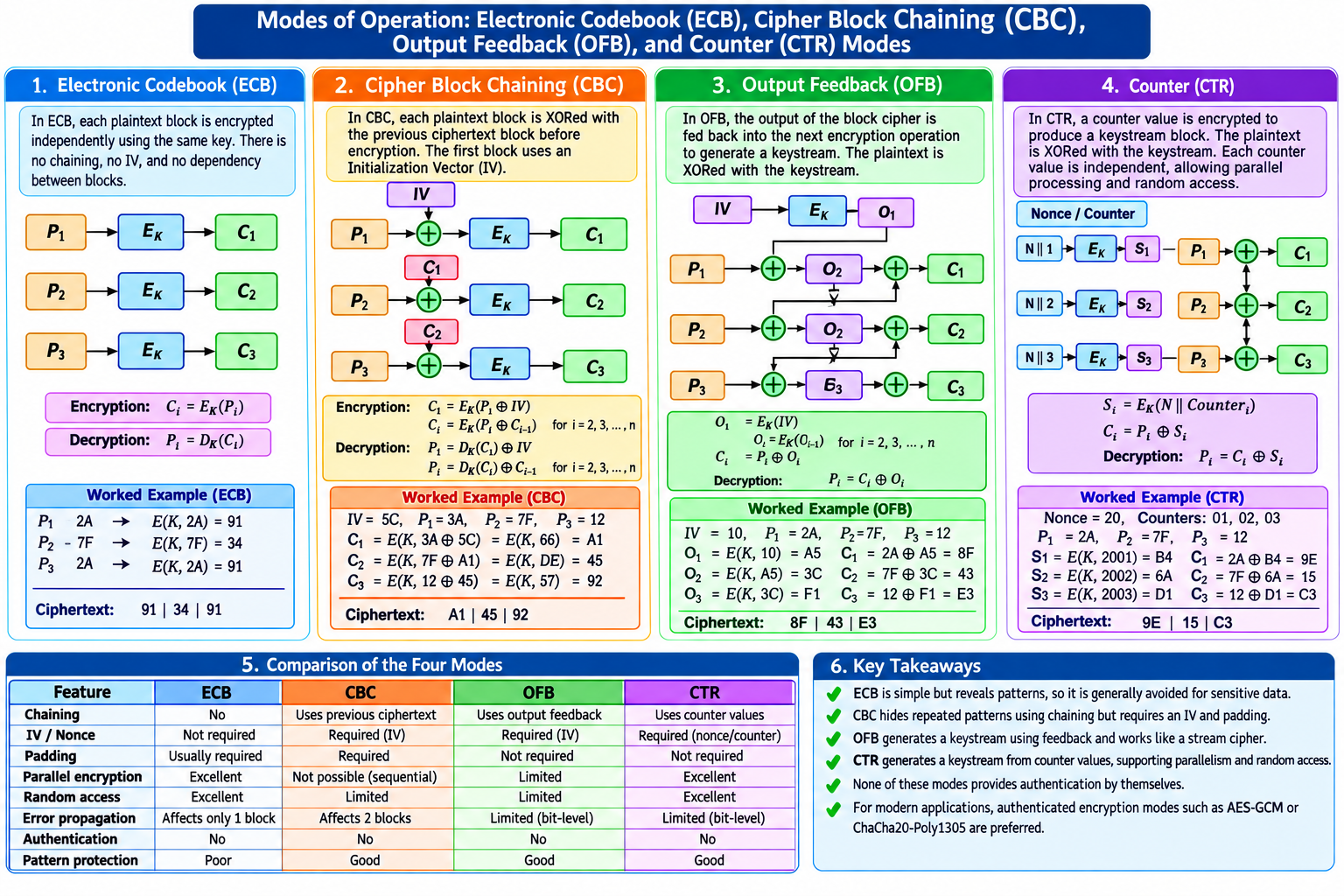
Modes of Operation: ECB, CBC, OFB, and CTR Introduction A block cipher is a symmetric-key cryptographic algorithm that encrypts information in fixed-size blocks. Examples include the Advanced Encryption Standard (AES) and the older Data Encryption Standard (DES). AES operates on 128-bit blocks,....
Read MoreDate: 6th October 2026, Tuesday | Editor: Techk's Team
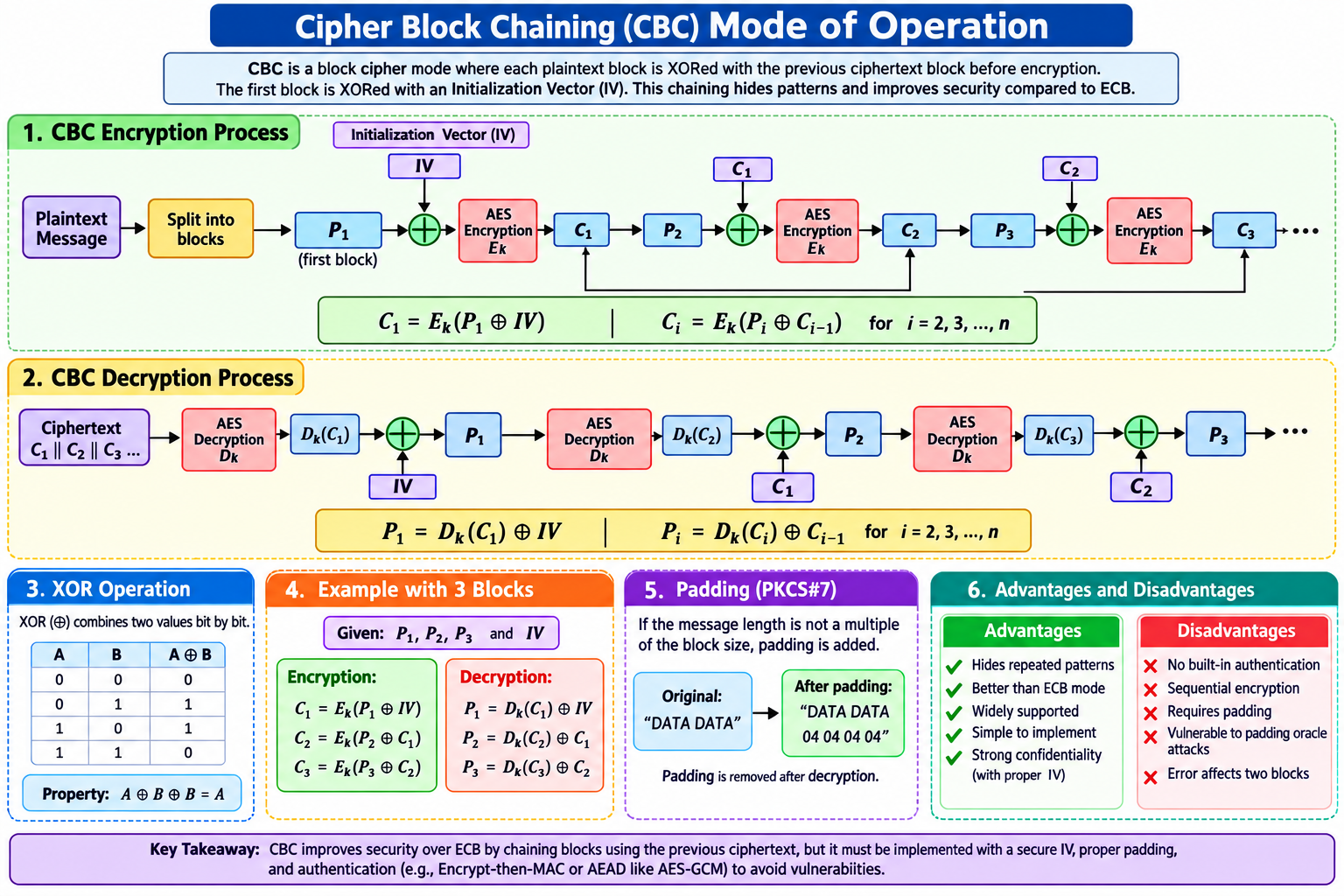
Introduction Cipher Block Chaining (CBC) is one of the classical modes of operation for block ciphers. It allows a block cipher such as the Advanced Encryption Standard (AES) to securely encrypt messages that are longer than a single fixed-size block. Instead of encrypting every plaintext block....
Read MoreDate: 5th October 2026, Monday | Editor: Techk's Team
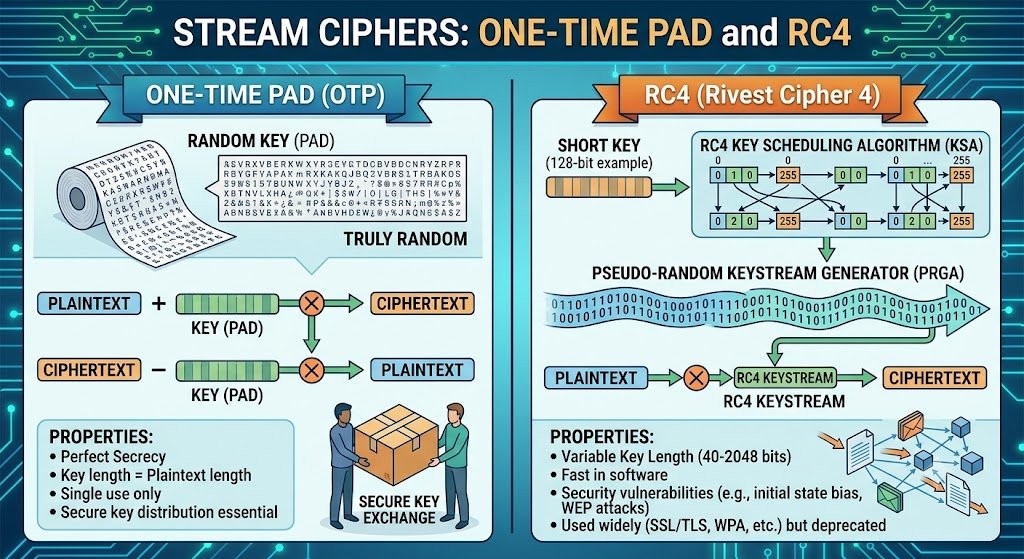
Introduction to Stream Ciphers A stream cipher is a symmetric-key encryption technique that encrypts plaintext one bit, one byte, or sometimes a larger unit at a time by combining the plaintext with a generated keystream. Unlike a block cipher, which processes fixed-size blocks such as 64 or 128....
Read MoreDate: 5th October 2026, Monday | Editor: Techk's Team
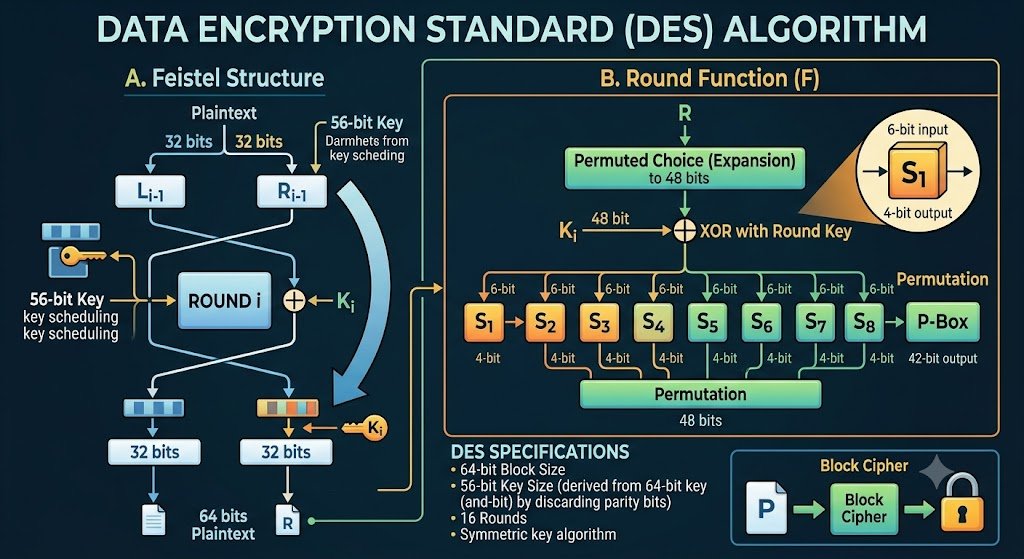
Introduction to DES The Data Encryption Standard (DES) is a symmetric-key block cipher that was historically one of the most widely used encryption algorithms. It was designed to protect digital information from unauthorized access by transforming readable plaintext into unintelligible ciphertext.....
Read MoreDate: 5th October 2026, Monday | Editor: Techk's Team
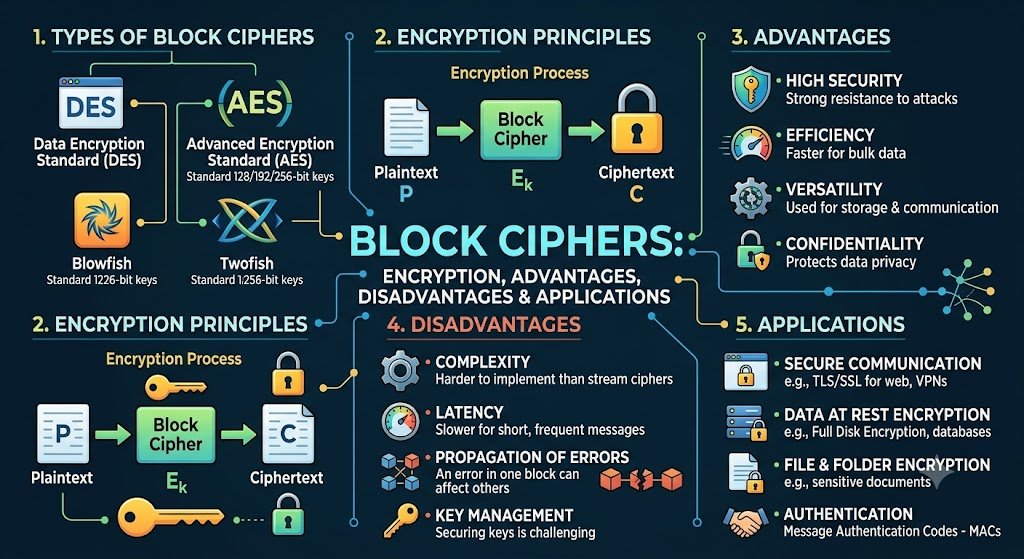
Introduction to Block Ciphers A block cipher is a fundamental cryptographic technique used to protect digital information by transforming plaintext into ciphertext. Unlike methods that process data one character or bit at a time, a block cipher divides the plaintext into fixed-size blocks and....
Read MoreDate: 2nd October 2026, Friday | Editor: Techk's Team
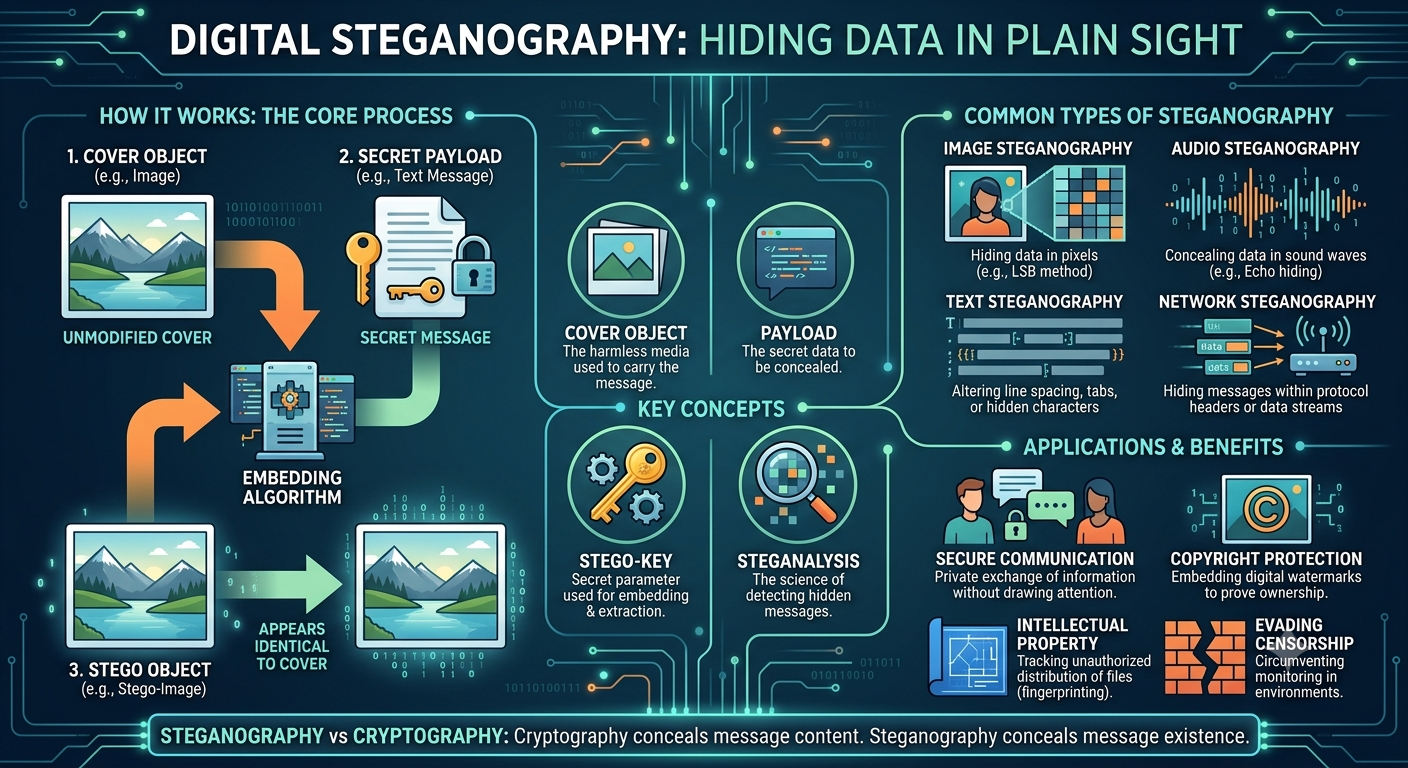
Steganography is the ancient art and modern science of hiding information within ordinary, non-secret messages or media to avoid detection. Unlike cryptography, which scrambles a message so that unauthorized parties cannot read its content, steganography conceals the very existence of the....
Read MoreDate: 2nd October 2026, Friday | Editor: Techk's Team
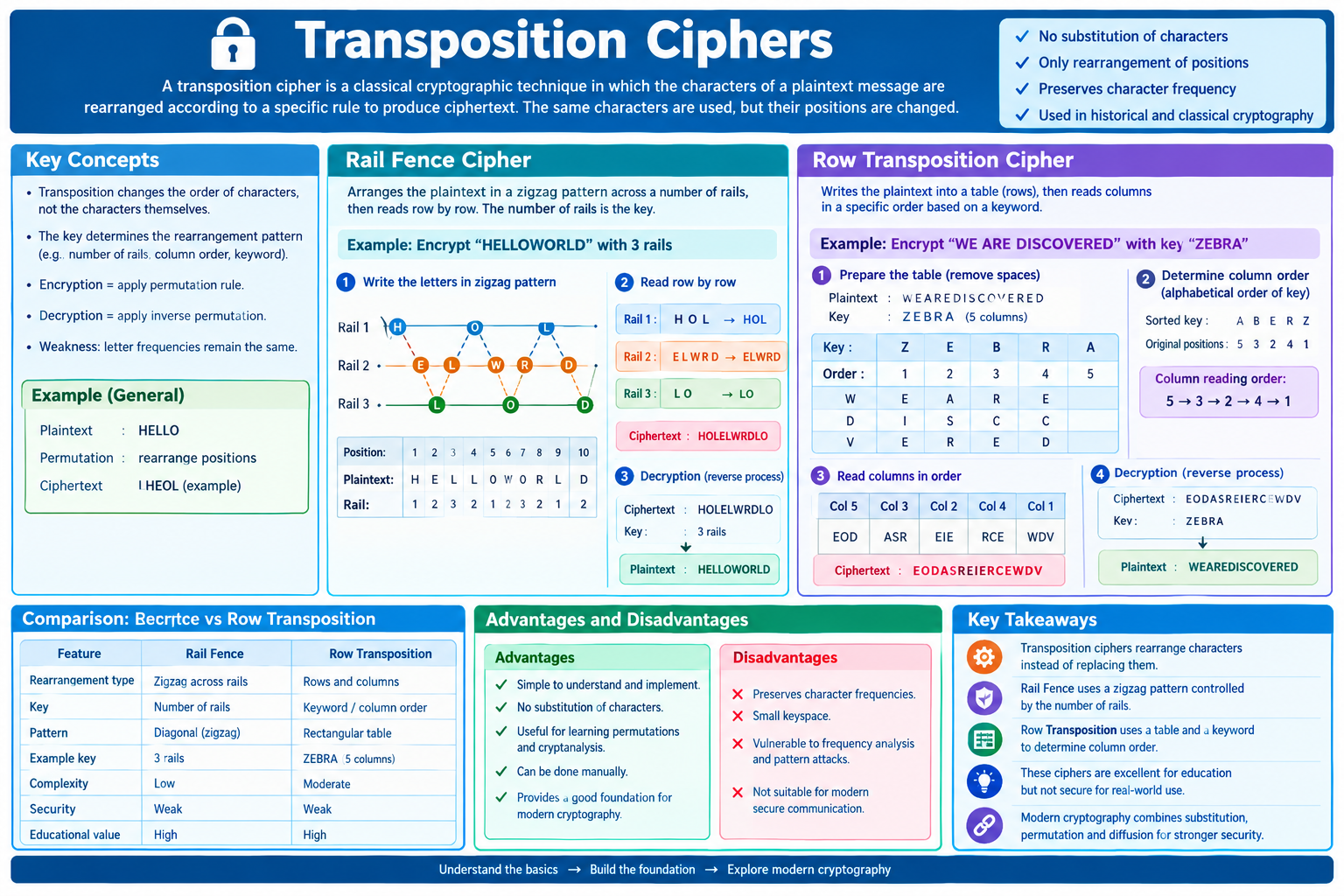
Introduction to Transposition Ciphers A transposition cipher is a classical cryptographic technique in which the characters of a plaintext message are rearranged according to a specific rule to produce ciphertext. Unlike substitution ciphers, transposition does not replace plaintext characters....
Read MoreDate: 2nd October 2026, Friday | Editor: Techk's Team
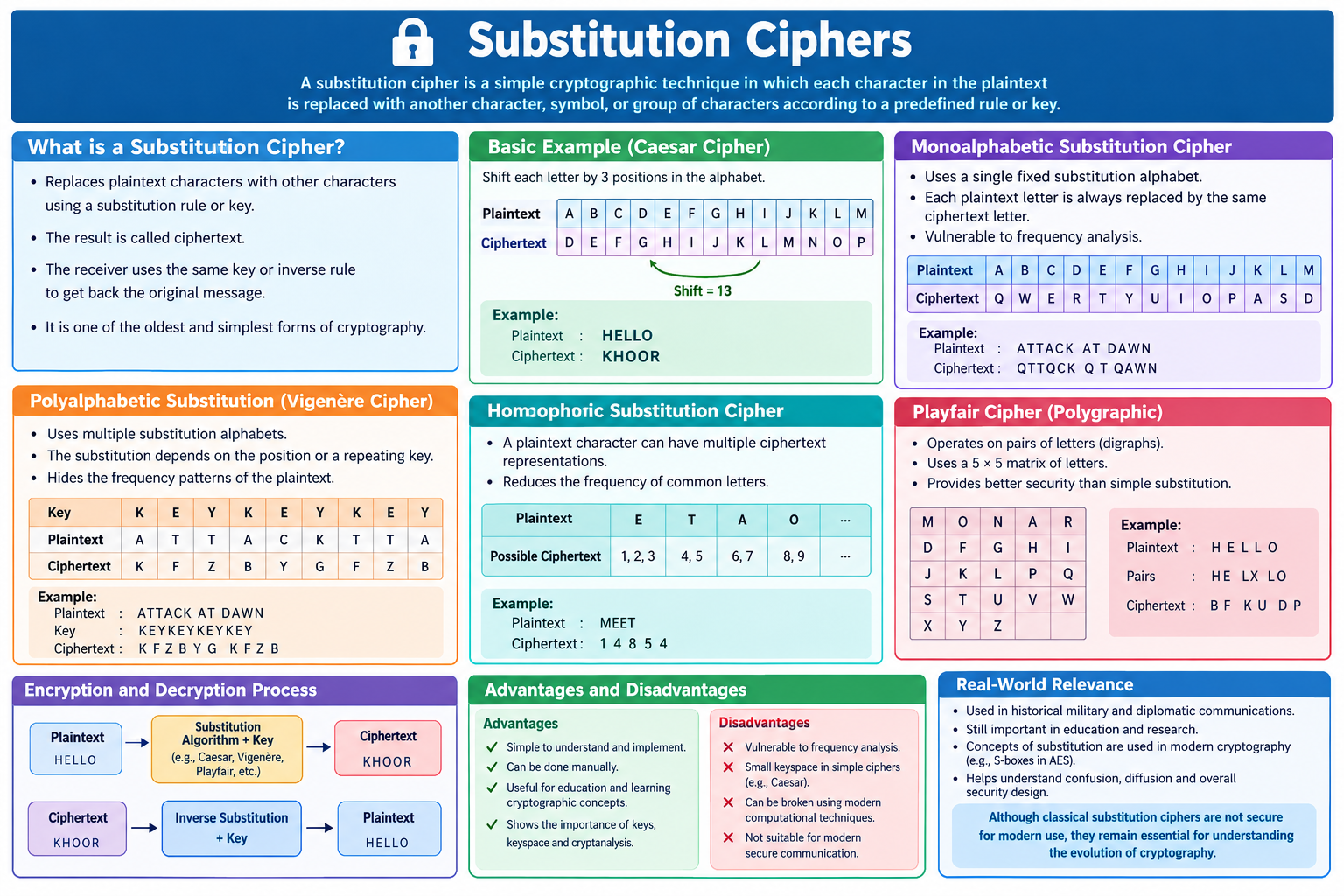
Introduction to Substitution Ciphers A substitution cipher is one of the oldest and simplest techniques used in cryptography to protect information. In a substitution cipher, characters in the original plaintext are replaced with other characters, symbols, numbers, or groups of characters....
Read MoreDate: 1st October 2026, Thursday | Editor: Techk's Team
Asymmetric Cryptography 1. Introduction to Asymmetric Cryptography Asymmetric cryptography, also known as public-key cryptography, is a major branch of modern cryptography that uses two mathematically related keys instead of a single shared secret key. These two keys are called the public key and....
Read MoreDate: 1st October 2026, Thursday | Editor: Techk's Team
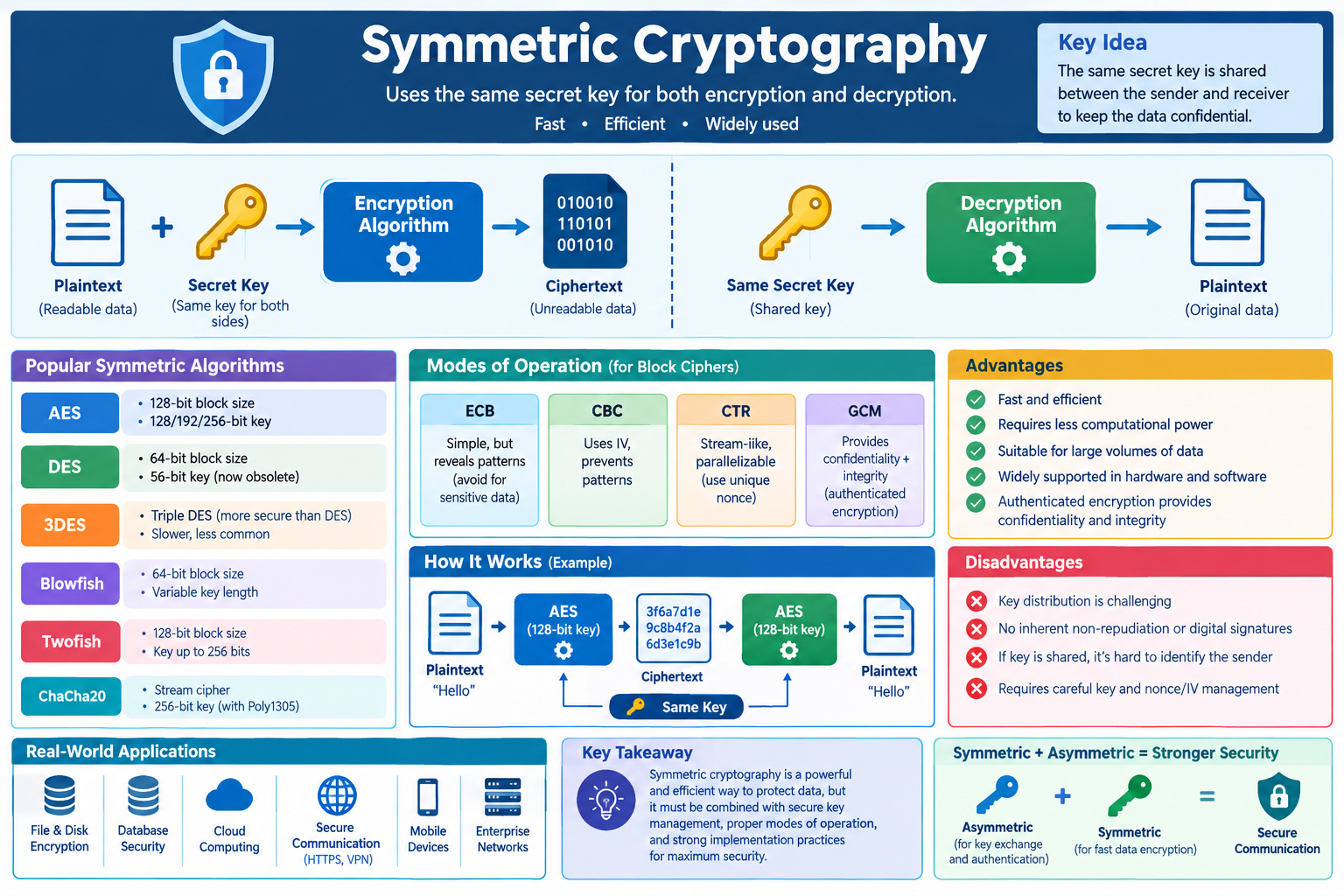
Introduction to Symmetric Cryptography Symmetric cryptography is one of the oldest and most important branches of modern cryptography. It is a method of protecting information by using the same secret key for both encryption and decryption. In simple terms, the sender uses a secret key to convert....
Read MoreDate: 30th September 2026, Wednesday | Editor: Techk's Team
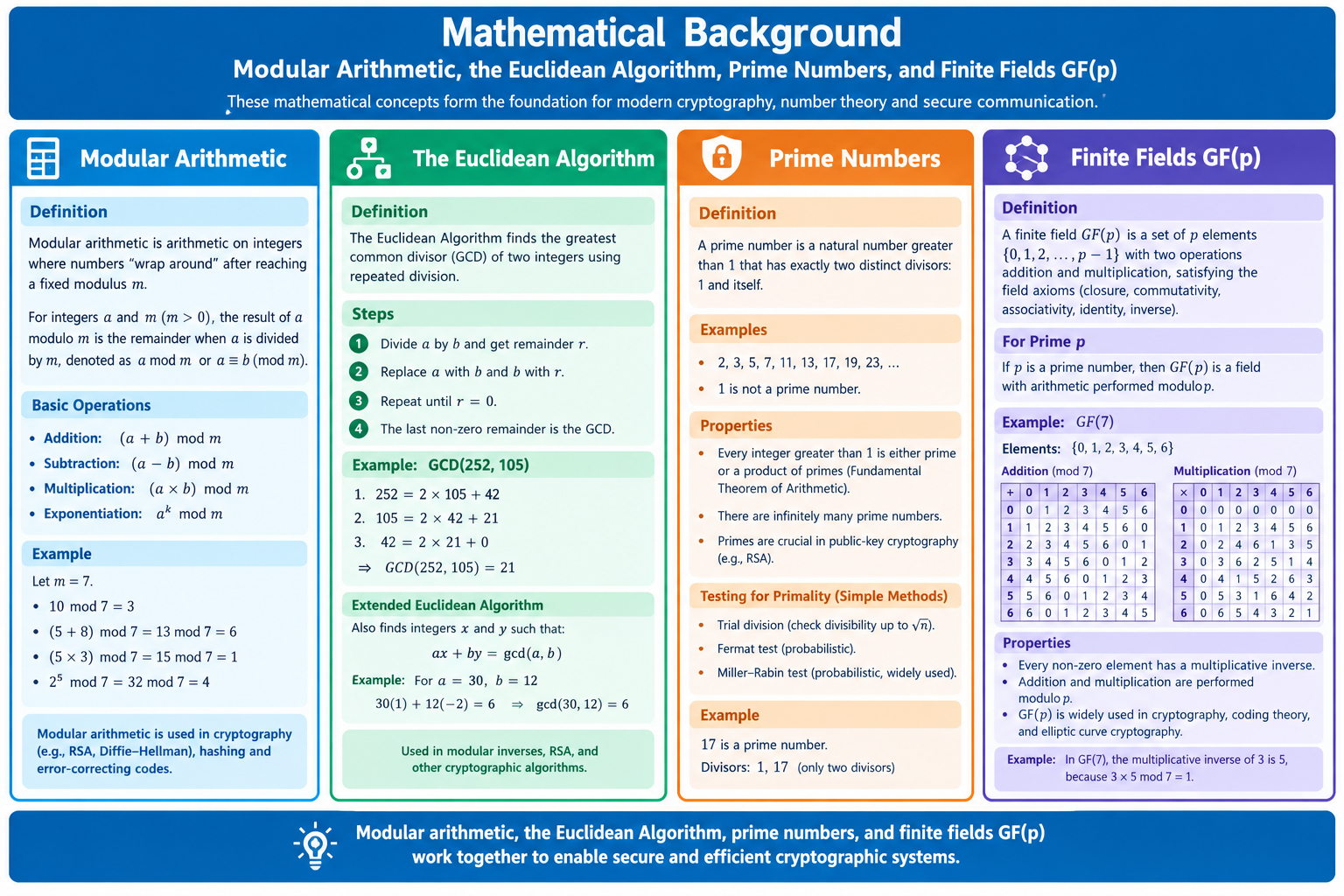
Introduction Modern cryptography rests on a small set of mathematical ideas from number theory and abstract algebra. Ciphers such as RSA, Diffie-Hellman, elliptic-curve systems, and AES all perform arithmetic in structured finite sets rather than on ordinary real numbers. Understanding these....
Read MoreDate: 30th September 2026, Wednesday | Editor: Techk's Team
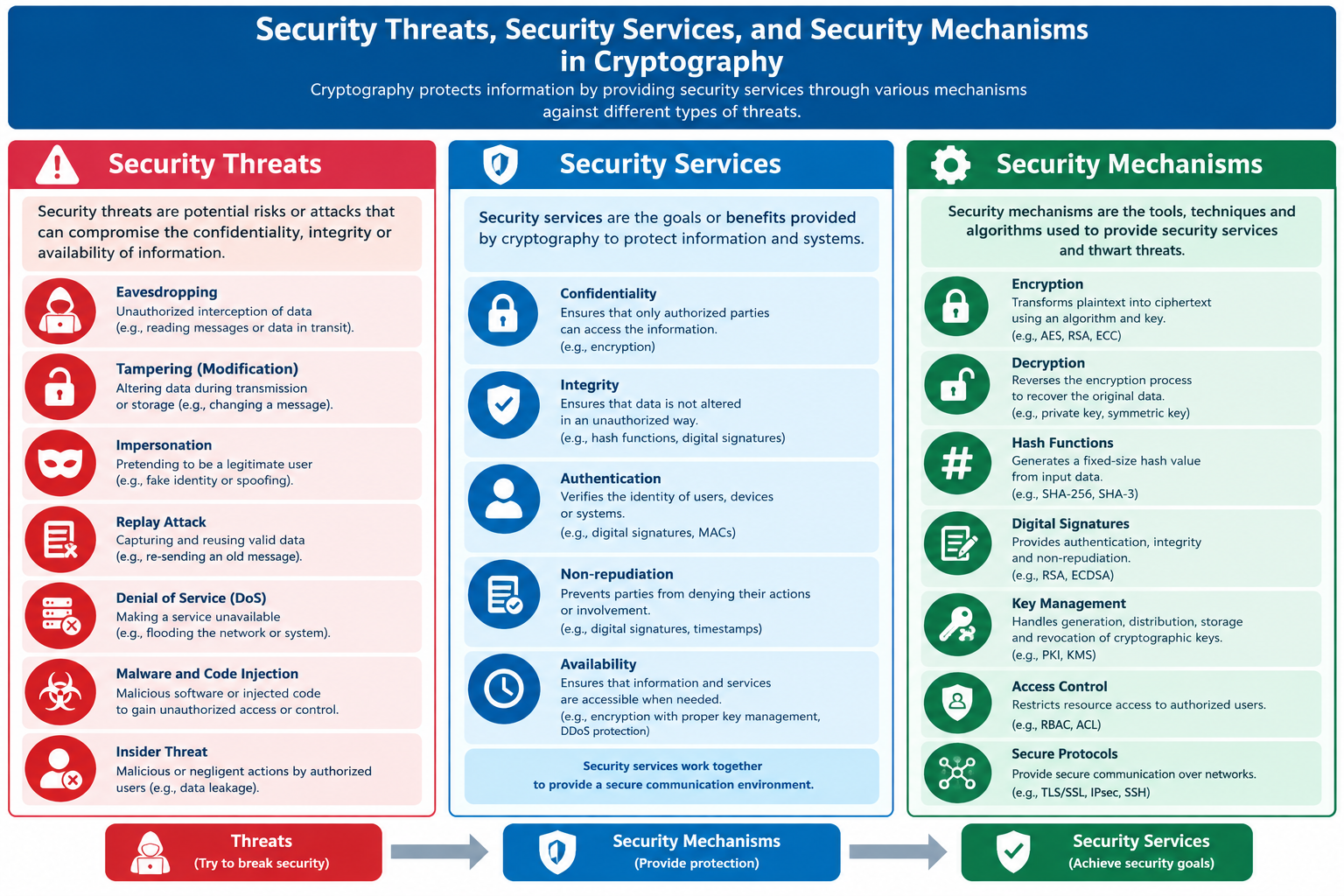
Introduction Information security is the discipline of protecting data, systems, and communications from unauthorized access, alteration, disruption, or destruction. As organizations and individuals rely on networks for banking, commerce, healthcare, education, and government, the value of the....
Read MoreDate: 28th September 2026, Monday | Editor: Techk's Team
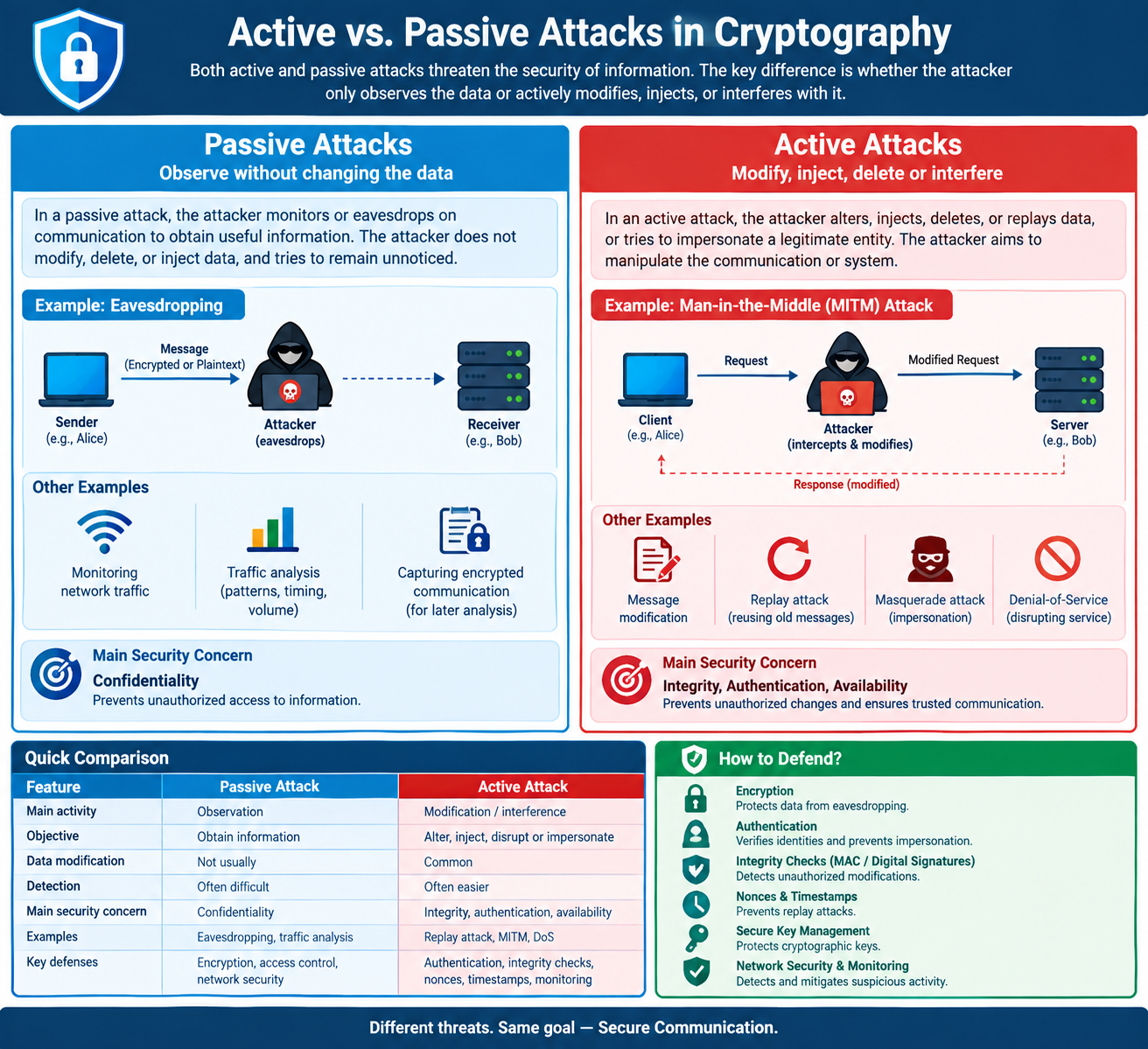
Introduction to Cryptographic Attacks Cryptography is designed to protect information from unauthorized access, modification, impersonation, and other security threats. However, cryptographic systems operate in environments where attackers may attempt to observe communications, manipulate....
Read MoreDate: 28th September 2026, Monday | Editor: Techk's Team
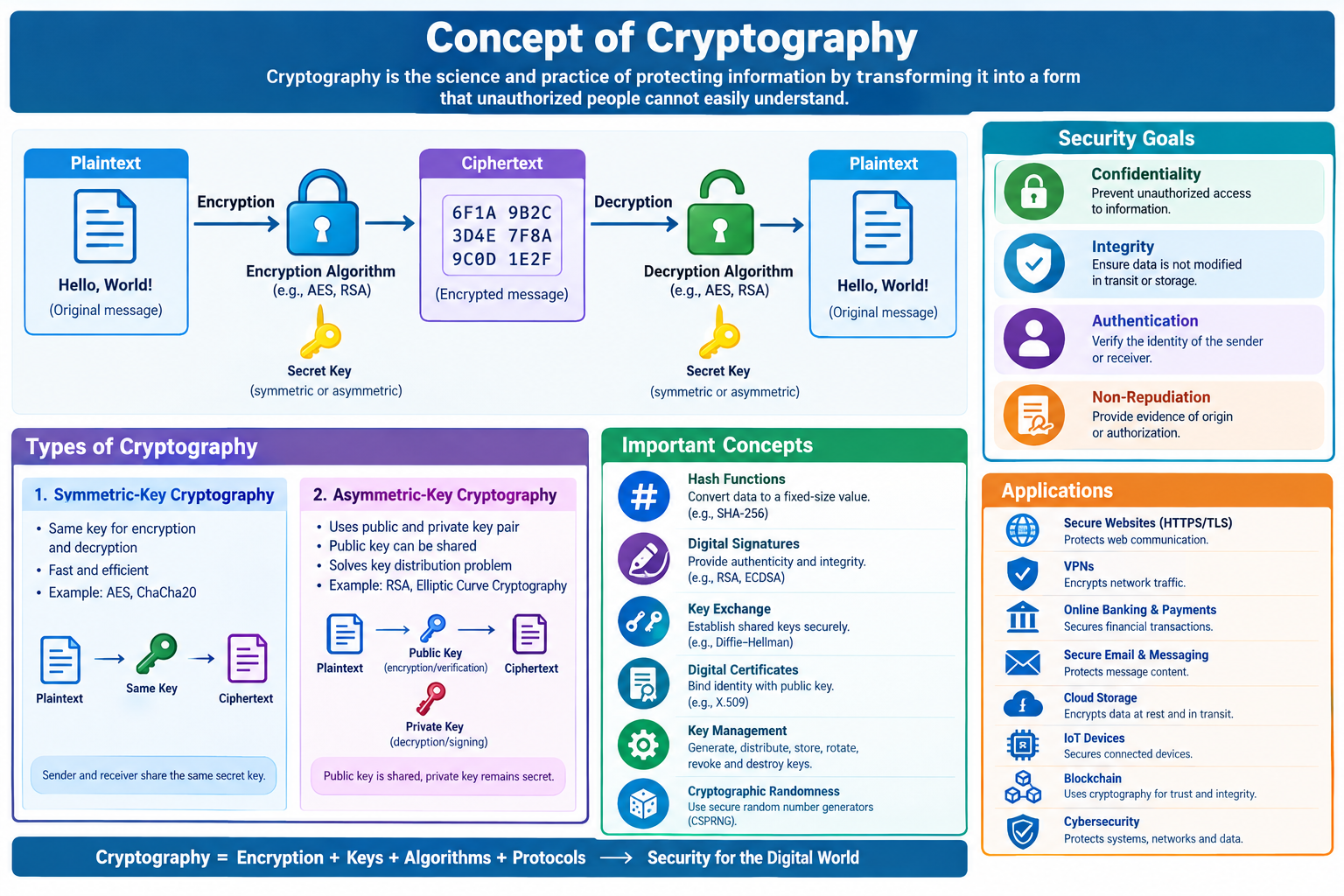
Introduction to Cryptography Cryptography is the science and practice of protecting information by transforming it into a form that unauthorized people cannot easily understand. The word cryptography originates from Greek words meaning “hidden writing.” In modern computer networks,....
Read MoreDate: 22nd April 2025, Tuesday | Editor: Techk Team
In today’s digital world, where data breaches and cyberattacks are becoming more frequent, cryptography plays a vital role in ensuring secure communication and data protection. But what exactly is cryptography, and why is it so crucial in the modern age of technology? This article breaks....
Read More


| Links 1 | Links 2 | Products | Pages | Follow Us |
|---|---|---|---|---|
| Home | Founder | Gallery | Contact Us | |
| About Us | MSME | CouponPat | Sitemap | |
| Cookies | Privacy Policy | Kaustub Study Institute | ||
| Disclaimer | Terms of Service | |||

© @ 2020 - 2026 TECHK, A KAUSTUB TECHNOLOGIES INC. | ALL RIGHTS RESERVED.